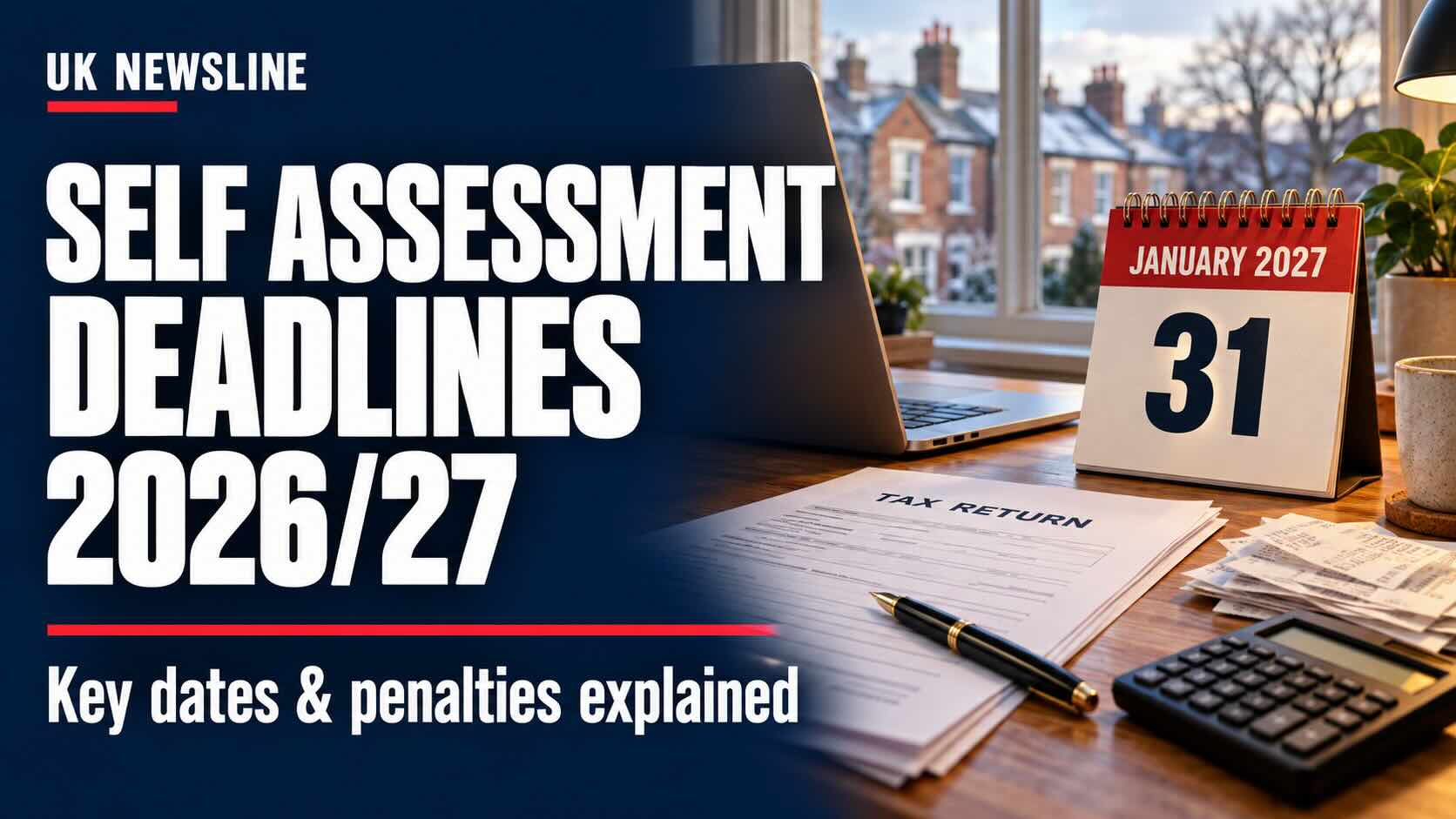
Self Assessment Deadline 31 January 2027: Key Dates and Penalties (2025/26 Tax Year)
Last updated: 21 October 2026
If you need to file a Self Assessment tax return for the 2025 to 2026 tax year (6 April 2025 to 5 April 2026), the key deadline is 11:59pm on 31 January 2027. By then you must file online and pay any tax you owe. Paper returns are due much earlier, on 31 October 2026. If you’re new to Self Assessment, the deadline to register was 5 October 2026. If you missed it, register as soon as possible.
Self Assessment key dates
Here’s what you need to know:
| Date | What’s due |
|---|---|
| 5 October 2026 | Register for Self Assessment if you need to file for the first time (or didn’t file for 2024/25) |
| 31 October 2026 | Paper tax returns must reach HMRC by 11:59pm |
| 30 December 2026 | File online by this date if you want unpaid tax (under £3,000) collected through your PAYE tax code |
| 31 January 2027 | Online return deadline and deadline to pay the tax you owe for 2025/26, plus your first payment on account for 2026/27 |
| 31 July 2027 | Second payment on account for 2026/27 |
Who needs to file a Self Assessment return?
You usually need to file if, in the 2025/26 tax year, you:
- were self-employed and earned more than £1,000
- were a partner in a business partnership
- had untaxed income, such as rental income, tips or commission, or significant savings or investment income
- had to pay the High Income Child Benefit Charge
- had Capital Gains Tax to pay that you didn’t report through the real-time service
If you’re not sure, GOV.UK has a short online checker.
How payments on account work: an example
Payments on account confuse many first-time filers, because the January bill can be much bigger than expected. Here’s a simple example for someone filing for the first time who owes £3,000 for 2025/26:
| Date | What you pay | Amount |
|---|---|---|
| 31 January 2027 | Tax for 2025/26 (£3,000) plus first payment on account for 2026/27 (half of £3,000) | £4,500 |
| 31 July 2027 | Second payment on account for 2026/27 | £1,500 |
If your income for 2026/27 turns out lower, you can apply to reduce your payments on account. If it’s higher, you pay the difference (the “balancing payment”) on 31 January 2028.
How to register for Self Assessment
- Self-employed: register online as a sole trader. You’ll get a Unique Taxpayer Reference (UTR) by post, usually within 15 working days (longer if you live abroad).
- Not self-employed (for example, rental income or a large savings income): register using HMRC’s online form for people who aren’t self-employed.
- Set up your Government Gateway account so you can file online. Do it early, as the activation code is posted to you.
If you miss the 5 October 2026 registration deadline, register as soon as possible. A penalty for failing to notify usually applies only if you also have tax left unpaid after 31 January.
Making Tax Digital: what’s changing
From 6 April 2026, sole traders and landlords with qualifying income over £50,000 have to use Making Tax Digital for Income Tax. That means keeping digital records and sending quarterly updates through compatible software. Lower thresholds are planned for later years. This doesn’t change how you file your 2025/26 return due on 31 January 2027, but if it applies to you, it’s worth choosing your software now.
Penalties for missing the deadline
Late filing
- £100 as soon as your return is late, even if you have no tax to pay
- After 3 months: £10 a day, up to £900
- After 6 months: a further 5% of the tax due or £300, whichever is higher
- After 12 months: another 5% or £300, whichever is higher
Late payment
You’ll be charged interest on tax you pay late, plus penalties of 5% of the unpaid tax at 30 days, 6 months and 12 months.
Can I appeal?
Yes. If you had a reasonable excuse, such as serious illness, a bereavement, or an HMRC system failure, you can appeal the penalty. You must still file and pay as soon as you can.
Tips to file on time
- Find your UTR and Government Gateway login now. Activation codes are sent by post and can take up to 10 days.
- Collect your records: P60 or P45, bank interest statements, invoices and receipts, rental income and expenses, pension contributions and Gift Aid.
- File early, pay later. Filing in November or December shows you exactly what you owe, so you have time to budget before 31 January.
- Can’t pay in full? You may be able to set up a Time to Pay arrangement with HMRC online.
- Watch out for scams. HMRC never asks for bank details by text or email, and never threatens arrest.
Frequently asked questions
What time is the Self Assessment deadline?
11:59pm on 31 January 2027 for online returns and payment.
What is a payment on account?
Advance payments towards next year’s tax bill, usually each half of the previous year’s bill. They apply if your last bill was over £1,000 and less than 80% of your tax was taken at source.
Sources: GOV.UK – Self Assessment deadlines; GOV.UK – Self Assessment penalties. This is general information, not tax advice.