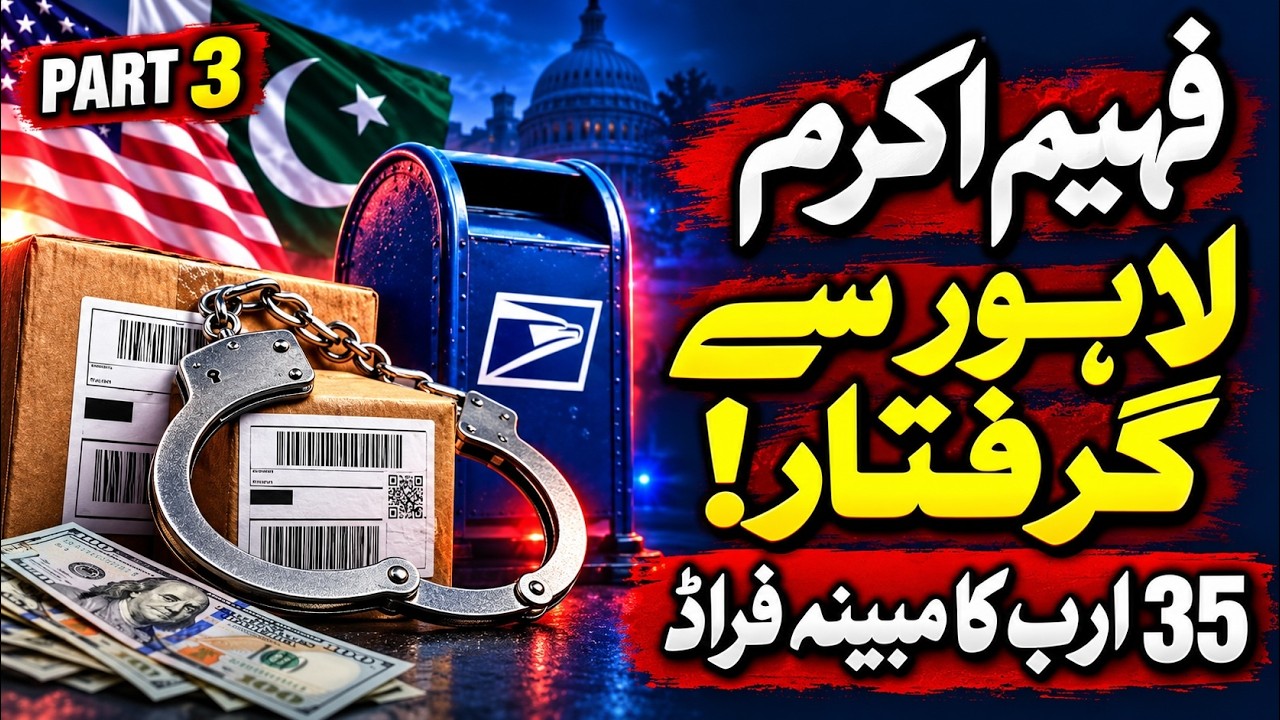
Faheem Akram Arrested in Lahore: How NCCIA Tracked the Suspect in the Alleged Rs35bn Fake US Postage Scam
Last updated: 21 October 2026
Pakistan’s National Cyber Crime Investigation Agency (NCCIA) has arrested Faheem Akram, a 33-year-old software engineer from Khanewal, in Lahore. He is wanted in the United States, where prosecutors accuse him of running LabelsBank.com, a website that allegedly sold more than 5.1 million counterfeit US postage labels. US prosecutors put the Postal Service’s losses at more than $126 million, which Pakistani officials describe as about Rs35 billion. Akram has not been convicted, and the allegations have not been proven in court.
Watch: how Faheem Akram was caught (Urdu)
Here’s what you need to know:
In the third part of our video series, Niaz Shakir explains how investigators traced the suspect, based on official NCCIA statements and media reports.
Missed the earlier episodes? Watch Part 1 and Part 2 on the Niaz Shakir TV YouTube channel.
What is Faheem Akram accused of?
According to US court records reported by Geo News and Arab News, a federal grand jury in Florida charged Akram last month. The US Attorney’s Office for the Southern District of Florida announced the case, which is being investigated by the US Postal Inspection Service (USPIS) in Miami.
Prosecutors allege that LabelsBank.com:
- sold counterfeit USPS shipping labels at a fixed price, typically $2 per label, whatever the weight, size or destination of the parcel
- sold more than 5.1 million labels to more than 5,000 customers
- operated from about August 2023 to September 2026, according to the NCCIA
- was never authorised to sell US Postal Service products
A US federal judge authorised the seizure of the LabelsBank.com domain, and the site has been shut down. The USPIS also offered a reward of up to $100,000 for information leading to Akram’s arrest and conviction.
He faces one count of conspiracy to defraud the United States and to make and sell counterfeit postage, five counts of making and selling counterfeit postage labels, and four counts of wire fraud. If convicted, the conspiracy and counterfeiting counts each carry up to five years in prison, and each wire fraud count up to 20 years.
How the NCCIA says it tracked him down
NCCIA Additional Director for the Lahore Zone, Atif Amir, set out the operation at a press conference in Lahore. A case was registered under FIR No. 246/2026, and investigators say they:
- formed eight special teams across Punjab, Islamabad and Sindh
- carried out 35 raids and questioned 47 people
- analysed 122 call data records and 50 IMEI tracking reports
- reviewed audio and video from 120 cameras, using artificial intelligence tools
- ran a 10-day locator operation that ended with his arrest in Lahore
NCCIA Director General Syed Ali Nasir Rizvi later reviewed the operation with senior officers and praised their “professional skills, hard work and effective strategy”, according to the Associated Press of Pakistan.
The money trail: 16 bank accounts
Investigators say 16 bank accounts were allegedly used to move money from the scheme:
| Account holder | Accounts |
|---|---|
| The suspect | 7 |
| His brother | 5 |
| His wife | 2 |
| His sister | 1 |
| His maternal aunt | 1 |
The account holders have not been charged in the reports we have seen. A joint investigation team is examining the stamp sales, the financial transactions and whether anyone else was involved.
Rs35 billion or $10 million? What the numbers mean
Two very different figures appear in coverage of the case, and they measure different things:
- $126 million (about Rs35 billion) is the loss US prosecutors say the Postal Service suffered: the postage and shipping costs that should have been paid on parcels sent with the fake labels.
- About $10 million is a rough estimate of what buyers may have paid the website itself, based on the reported 5.1 million labels at about $2 each. This is our own calculation, not an official figure.
In other words, the alleged scheme let buyers ship parcels for a small fraction of the real postage cost, and the Postal Service carried the difference.
What happens next?
Akram now faces investigation in Pakistan under the NCCIA case, while the US indictment remains in place. Reports so far have not said whether, or when, he could be handed over to the United States. In both countries he is presumed innocent unless proven guilty.
US investigators have also warned that counterfeit labels like these often turn up in reshipping scams, where people are recruited online to forward parcels and unknowingly handle stolen goods. If you buy postage for an online business, buy it only from the carrier itself or an authorised reseller. Labels that are far cheaper than the official rate are a warning sign.
We will update this article as the case develops.
Sources: Geo News; Associated Press of Pakistan; ProPakistani; Arab News; FreightWaves. All allegations against the accused remain to be proven in court.