
Introduction
Here’s what you need to know:
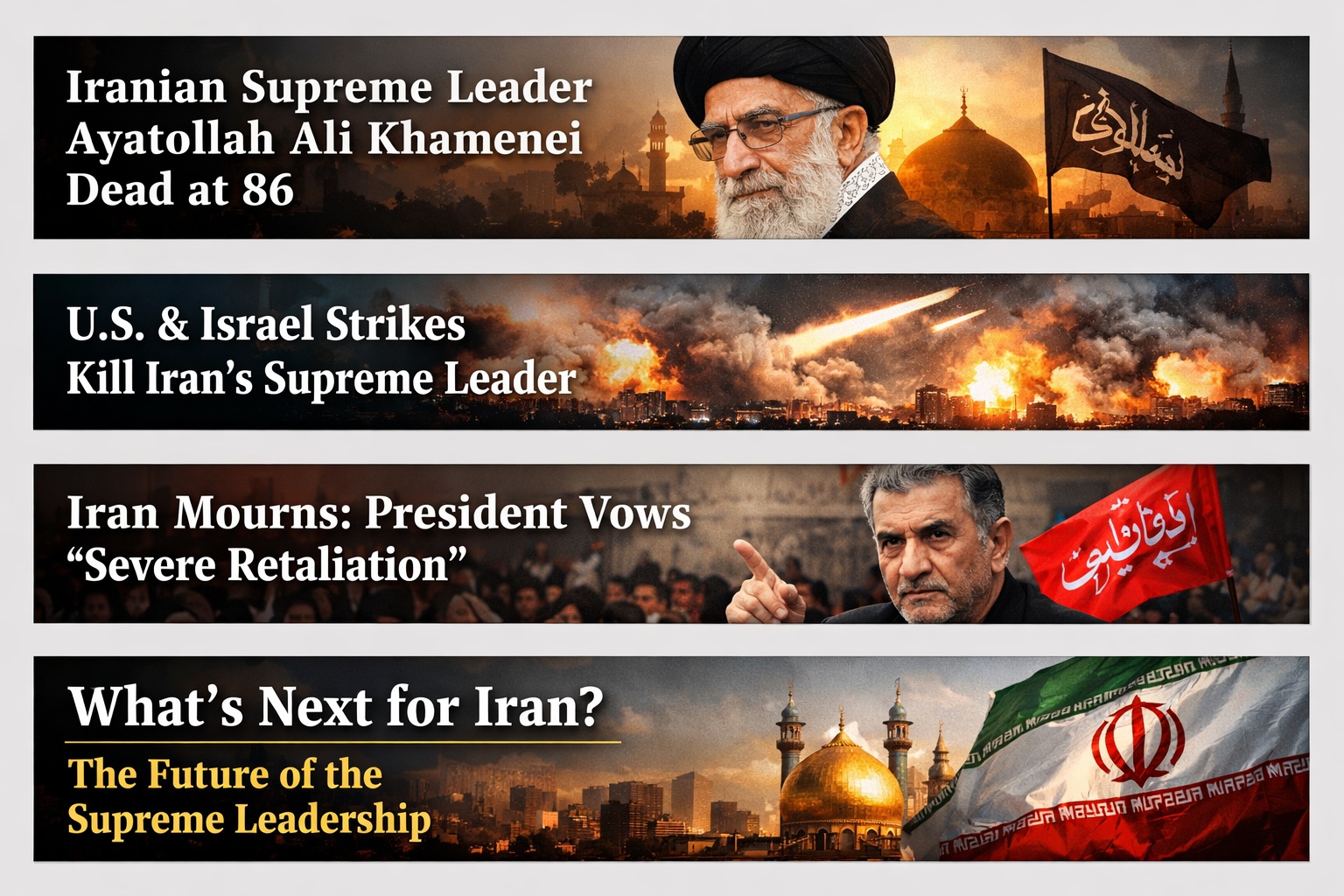
The world woke on March 1, 2026, to one of the most consequential developments in modern geopolitical history: the death of Iran’s Supreme Leader, Ayatollah Seyed Ali Khamenei, at the age of 86. This extraordinary event has triggered international reactions, regional volatility, and questions about the future of Iran’s leadership structure — especially amid ongoing tensions with the United States and Israel.
In this comprehensive article, we unpack every aspect of this historic moment — from the cause of death to the reaction of the Iran President, the implications for the country’s leadership, and what comes next for the Iranian people and global geopolitics.
Important Note: The article is based on widespread reporting from reputable international outlets. The death of Iran’s Supreme Leader has been officially confirmed by Iranian state media, and major governments and news organizations are reporting it as a verified event
Who Was Ayatollah Ali Khamenei?
Early Life and Rise to Power
Born in 1939 in Mashhad, Iran, Ayatollah Ali Khamenei rose through the clerical ranks during the turbulent years leading up to and following the 1979 Islamic Revolution. He was a key figure in the revolutionary movement that toppled the Shah and established the Islamic Republic.
Khamenei initially served in various influential roles, including as Iran’s President in the 1980s (before becoming Supreme Leader). After the death of Ayatollah Ruhollah Khomeini, the founder of the Islamic Republic, in 1989, Khamenei was appointed as the Supreme Leader — the highest authority in Iran’s political and religious hierarchy.
Role as Supreme Leader
As Supreme Leader, Khamenei held ultimate authority over all major institutions in Iran: the military (including the Islamic Revolutionary Guard Corps), foreign policy, judiciary, and media. Over his 37-year tenure, he shaped Iran’s internal and external politics, overseeing major conflicts, diplomatic confrontations, widespread domestic crackdowns on dissent, and a prolonged standoff with Western powers.
You may also read :Iranian Supreme Leader’s Death
Iranian Supreme Leader’s Death: Confirmed Reports
Official Confirmation
On March 1, 2026, Iranian state television and state news agencies formally confirmed the death of Ayatollah Ali Khamenei, declaring a 40-day national mourning period.
This confirmation came after **multiple sources — including foreign governments and independent media — reported that Khamenei had died during a wave of joint U.S. and Israeli strikes on Iran.
Cause of Death and Circumstances
While Iranian state media described the event as the “martyrdom” of Khamenei, the widely reported cause of death is that he was killed during a strategic military operation carried out by the United States and Israel against Iranian military and political targets.
According to international reporting:
-
The strikes were part of a broader military campaign against Iran’s key command centers.
-
Khamenei was reportedly killed at his compound or office in Tehran during the initial phase of the strikes.
-
At age 86, he had been in power since 1989, making him one of the longest-serving leaders in the Middle East.
Conflicting Claims and Verification
In the immediate aftermath of the strikes, some initial reports questioned whether Khamenei was still alive, with older social media footage circulating that falsely claimed he had spoken after the attacks. These were debunked as previously recorded clips unrelated to the timing of the events
Iran Leader Death: The Aftermath
Iran President’s Reaction
Following the confirmation of the death, Iran’s President, Masoud Pezeshkian, denounced the killing as an act of aggression and accused the United States and Israel of committing a grave crime.
The President vowed retaliation and described the response as a “legitimate duty and right” of the Iranian nation, signaling that Tehran will pursue both military and diplomatic avenues in response.
National and Regional Response
The Iranian government also declared seven days of public holidays on top of the formal mourning period.
Symbolic gestures, including raising a red flag over mosques — interpreted as a call for revenge — have been reported across the country, highlighting the emotional and religious weight of this event among many Iranians and Shia communities.
Internal Social Reactions
Reactions within Iran have been deeply polarized. While state-led mourning ceremonies unfolded across major cities, observers also noted quiet private celebrations in some quarters. Fear, uncertainty, and shock were widespread due to the rapid escalation of violence and heavy security presence.
Was There a New Iran Supreme Leader?
Leadership Vacuum and Succession
With the death of the Supreme Leader, Iran faces a critical leadership transition. The Islamic Republic’s constitution outlines a process for selecting a new Supreme Leader, typically involving the Assembly of Experts, a clerical body responsible for leadership selection.
At present, Iranian authorities have set up a temporary ruling council consisting of senior political and religious figures, including the President and judiciary officials, to manage state affairs until a new leader is chosen.
Potential Successors
Analysts emphasize that internal factions — including the political leadership, senior clerics, and the Revolutionary Guard — will all play a key role in determining the next supreme authority, and there is no clear front-runner at this stage.
US Death Iran Claims and Context
U.S. Statements on Khamenei’s Death
The government of the United States, through its President, publicly acknowledged the death of Ayatollah Khamenei in social media posts and statements following the military operation. This acknowledgment underscored the strategic intent behind the strikes and the broader military objectives they were meant to achieve.
American officials framed the operation as necessary for national security and claimed it could open pathways for political change inside Iran — although these assertions are highly controversial and contested by many governments and analysts.
Global Response and Geopolitical Tensions
World leaders — including leaders in Europe, Russia, and regional capitals — have reacted with a mix of concern, caution, and condemnation, emphasizing the dangers of wider conflict in the Middle East.
European officials described the moment as a “defining point” for the future, expressing hope for an eventual political transformation in Iran while emphasizing the need for diplomatic solutions to avert broader escalation.
Historical Legacy: Ali Khamenei
Domestic Impact
During his tenure, Khamenei shaped Iran’s internal politics through:
-
Centralization of executive, military, and judiciary power.
-
Crackdowns on widespread internal protests, including the Green Movement and later domestic unrest.
-
Strong ideological control over civil liberties and media.
Regional Influence
Internationally, Khamenei’s leadership was marked by:
-
Support for allied non-state groups throughout the Middle East.
-
A confrontational stance toward Israel and persistent tensions with the United States.
-
A high degree of influence in Iraq, Syria, Lebanon, and Yemen through strategic alliances.
International Polarization
Khamenei remained a polarizing figure — revered by his supporters for resisting Western influence, while deeply criticized by opponents for authoritarian rule.
What Comes Next for Iran?
Political Transition
The leadership transition period will be fraught with internal negotiations, institution bargaining, and the potential elevation of a new Supreme Leader, whose mission will be to preserve or reform the core structures of the Islamic Republic.
Security and Military Dynamics
With Iran having already retaliated against U.S. and Israeli forces in the region, the risk of extended military escalation remains significant. Observers warn that instability could disrupt regional security dynamics and global energy markets, especially in the Gulf.
The Future of Iranian Society
Meanwhile, ordinary Iranian citizens face an uncertain future. Some hope the end of Khamenei’s rule may hasten political reforms or greater freedoms, while others fear harsher crackdowns and continued external pressures may worsen domestic hardships.
Final Thoughts
The confirmed death of Iranian Supreme Leader Ayatollah Ali Khamenei is a historic turning point with profound implications for Iran, the Middle East, and global geopolitics. As the nation enters a period of mourning and transition, the world watches closely to see how power will be transferred, how states will respond, and whether new opportunities for peace or further conflict will emerge.