
Introduction
Here’s what you need to know:
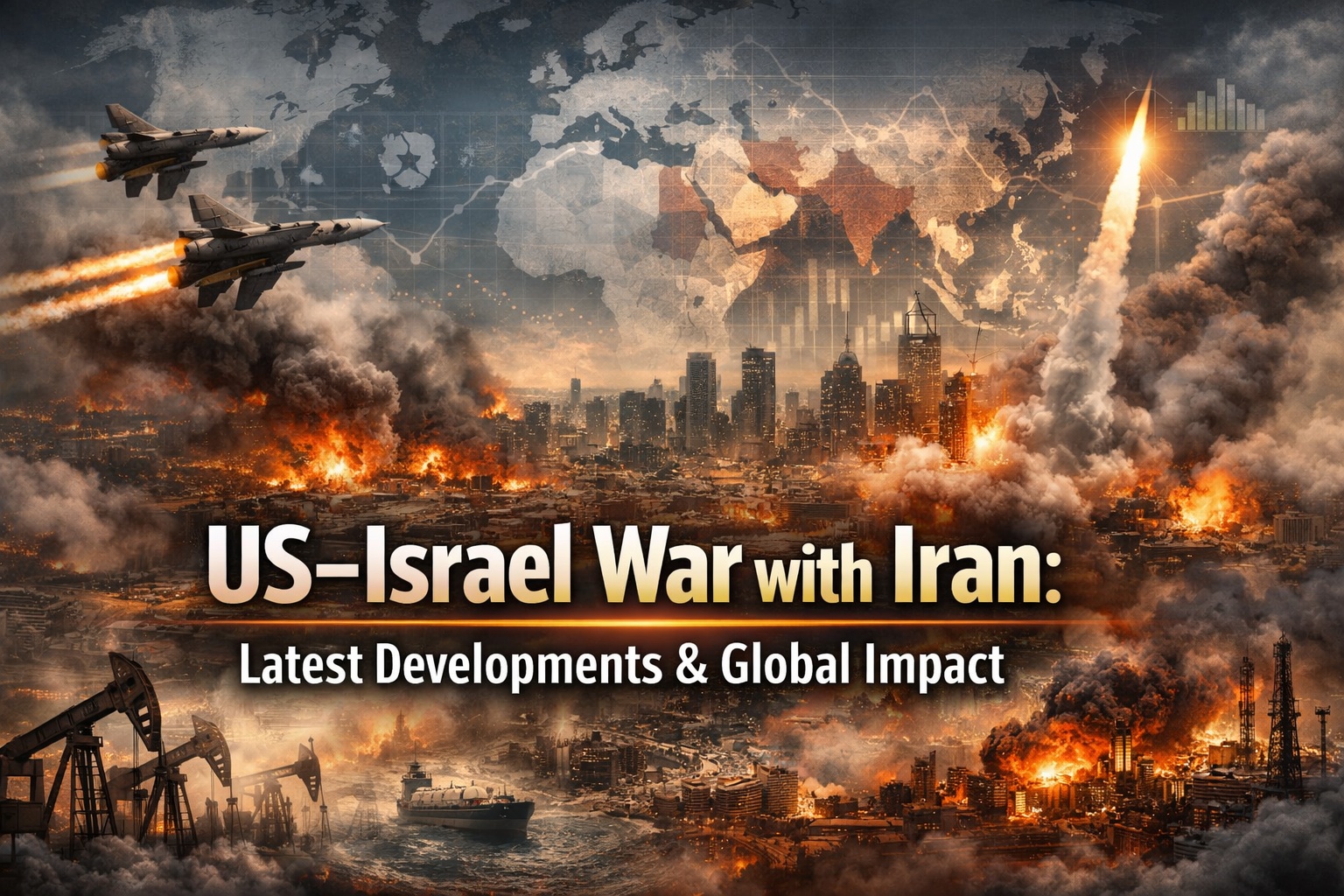
The ongoing war involving the United States, Israel, and Iran has become one of the most significant geopolitical crises of the 21st century. What began as escalating tensions over Iran’s nuclear program, regional influence, and military capabilities has now evolved into a direct military confrontation with global consequences. Since the conflict erupted in early 2026, the Middle East has experienced widespread instability, rising casualties, and a growing risk of a broader regional war.
The conflict has rapidly moved beyond a localized dispute. Countries across the Middle East are now involved either directly or indirectly, while global powers are closely monitoring the situation. Military operations, missile strikes, cyber warfare, and diplomatic negotiations have all become central elements of the conflict. Meanwhile, the economic and humanitarian consequences are being felt worldwide, particularly in global energy markets and international trade routes.
This article examines the latest developments in the US–Israel war with Iran, explores the historical background that led to the conflict, and analyzes its regional and global impact.
You may also read:Why are Israel and Iran fighting in 2026
Background of the US–Israel–Iran Conflict
Longstanding Rivalry Between Iran and Israel
The rivalry between Iran and Israel dates back to the Iranian Revolution in 1979, when Iran severed diplomatic relations with Israel and adopted an openly hostile stance toward the country. Over the decades, the confrontation evolved into a shadow war involving proxy forces, intelligence operations, and cyber attacks.
Iran has supported regional groups such as Hezbollah and Hamas, while Israel has repeatedly accused Iran of attempting to develop nuclear weapons and advanced missile systems. These tensions have led to several covert operations, assassinations, and targeted airstrikes across the Middle East.
Escalation Leading to the 2026 War
The current war began on February 28, 2026, when the United States and Israel launched coordinated airstrikes on several Iranian military and strategic sites. These attacks reportedly targeted missile facilities, nuclear infrastructure, and senior Iranian leadership figures.
The strikes resulted in the death of several high-ranking Iranian officials and triggered immediate retaliation from Tehran. Iran responded by launching missiles and drones against Israel, U.S. bases in the region, and allied Gulf countries.
The conflict quickly escalated into a broader regional war involving multiple fronts across the Middle East.
Latest Developments in the War
Intensified Military Operations
In recent weeks, the conflict has entered a more intense phase, with both sides increasing the scale and frequency of attacks. Israel has vowed to expand its military campaign against Iranian infrastructure and military facilities.
Airstrikes conducted by U.S. and Israeli forces have targeted locations in Tehran and other strategic regions. Iranian authorities have released images showing damaged buildings and ongoing rescue operations following these strikes.
Iran has responded with waves of missile and drone attacks targeting Israel and U.S. military installations in the Middle East. These attacks have also reached neighboring countries, raising concerns about a broader regional war.
Rising Casualties and Humanitarian Concerns
The human cost of the conflict continues to rise. Reports indicate that nearly 2,000 people have been killed in Iran, while thousands more have been injured since the start of the war.
Beyond Iran, civilians in countries such as Lebanon and Iraq have also been affected by the escalating violence. Displacement has become a major humanitarian issue, with hundreds of thousands of people forced to leave their homes.
Humanitarian organizations have warned that the crisis could worsen if the fighting continues, particularly in densely populated urban areas.
Strait of Hormuz Crisis
One of the most critical developments in the conflict is the situation in the Strait of Hormuz, a vital shipping route for global energy supplies.
Iranian forces have threatened to block the strait, through which around 20% of the world’s oil and gas trade passes.
This development has alarmed global markets and raised fears of a major disruption to international energy supplies.
Regional Impact of the War
Middle East Instability
The war has significantly destabilized the Middle East. Several countries in the region have been drawn into the conflict through military alliances, proxy forces, or security concerns.
Iran-aligned groups across the region have launched attacks against U.S. interests and allied states. Meanwhile, Israel has strengthened its military presence along multiple borders, including Lebanon and Syria.
Countries such as Iraq have become particularly vulnerable due to their geographic location and political divisions. Analysts warn that Iraq could become one of the most fragile fronts in the broader conflict.
Military Mobilization Across the Region
Israel has mobilized tens of thousands of additional reserve soldiers to strengthen its defense and prepare for possible regional escalation.
Meanwhile, Gulf nations are increasing security around critical infrastructure such as oil facilities, ports, and shipping lanes.
Several governments in the region are also preparing emergency plans to protect civilians and essential services in case the conflict spreads further.
Global Economic Consequences
Rising Oil Prices
One of the most immediate global impacts of the war has been the sharp increase in oil prices. As tensions around the Strait of Hormuz intensify, energy markets have reacted with significant volatility.
Oil prices have reportedly surged above $111 per barrel, raising concerns about global inflation and economic slowdown.
Countries that rely heavily on Middle Eastern oil imports, including many Asian and European economies, are particularly vulnerable to these disruptions.
Inflation and Economic Uncertainty
International economic organizations have warned that prolonged conflict could trigger inflation across major economies.
According to economic forecasts, continued disruption in energy supplies could push inflation higher in several countries, including the United States and members of the G20.
Higher energy prices also affect transportation, manufacturing, and food production, amplifying the economic consequences worldwide.
International Reactions and Diplomatic Efforts
Diplomatic Negotiations
Despite ongoing military operations, several diplomatic initiatives are underway to prevent further escalation.
Reports indicate that indirect negotiations between the United States and Iran may take place in neutral locations, including discussions facilitated by third-party countries.
However, progress remains uncertain, as both sides maintain firm positions on key issues such as Iran’s nuclear program and regional military activities.
Positions of Global Powers
Major global powers have taken different positions regarding the conflict:
- Russia has reportedly provided limited support to Iran, including potential satellite intelligence and military assistance.
- European countries have urged restraint and called for diplomatic solutions to prevent a wider war.
- Gulf Arab states have largely supported U.S. actions while also advocating for long-term regional stability.
This complex geopolitical landscape makes it difficult to achieve a rapid diplomatic resolution.
Military Strategy and Challenges
Objectives of the United States and Israel
The initial strategic objectives of the U.S. and Israel reportedly included weakening Iran’s military capabilities and potentially destabilizing the Iranian government.
However, experts now believe that achieving these goals may be more difficult than initially expected. Nearly a month into the war, the Iranian political system has shown significant resilience despite sustained military pressure.
As a result, Washington and Tel Aviv may be reconsidering their long-term strategy.
Iran’s Response Strategy
Iran’s strategy has focused on asymmetric warfare, including:
- Missile and drone strikes
- Proxy militia operations
- Disruption of shipping routes
- Cyber warfare
These tactics allow Iran to apply pressure on its adversaries without engaging in large-scale conventional battles.
Humanitarian and Social Impact
Civilian Displacement
The conflict has created a growing humanitarian crisis. Hundreds of thousands of people across the region have been displaced due to airstrikes, missile attacks, and security concerns.
Families in conflict zones face shortages of food, medical supplies, and essential services.
Psychological and Social Effects
Beyond physical destruction, the war has also caused significant psychological trauma among civilians.
Children and families living in affected regions are experiencing ongoing fear and uncertainty, while many communities struggle to maintain normal daily life amid continuous military operations.
Future Outlook of the Conflict
Possibility of Escalation
Several analysts warn that the war could expand further if additional countries become directly involved.
Potential flashpoints include:
- Hezbollah involvement from Lebanon
- Attacks on U.S. bases in Iraq and Syria
- Naval confrontations in the Persian Gulf
Such developments could transform the conflict into a broader regional war.
Chances for Peace
While diplomatic efforts continue, achieving a lasting peace agreement will require addressing several key issues, including:
- Iran’s nuclear program
- Regional security arrangements
- Missile development
- Proxy conflicts across the Middle East
Without progress on these issues, the risk of continued instability remains high.
Conclusion
The US–Israel war with Iran represents one of the most dangerous geopolitical crises of recent years. What began as a military confrontation between three major actors has rapidly evolved into a conflict with far-reaching consequences for the Middle East and the world.
The war has already caused significant human suffering, economic disruption, and political instability. Rising oil prices, global inflation risks, and humanitarian crises highlight the broader implications of the conflict.
As the situation continues to evolve, the international community faces a critical challenge: balancing military strategies with diplomatic efforts to prevent the war from escalating into a wider global crisis.
Whether through negotiations, international mediation, or shifts in strategic priorities, the coming months will likely determine the long-term future of the Middle East and the stability of the global order.