Rising Defense Budgets
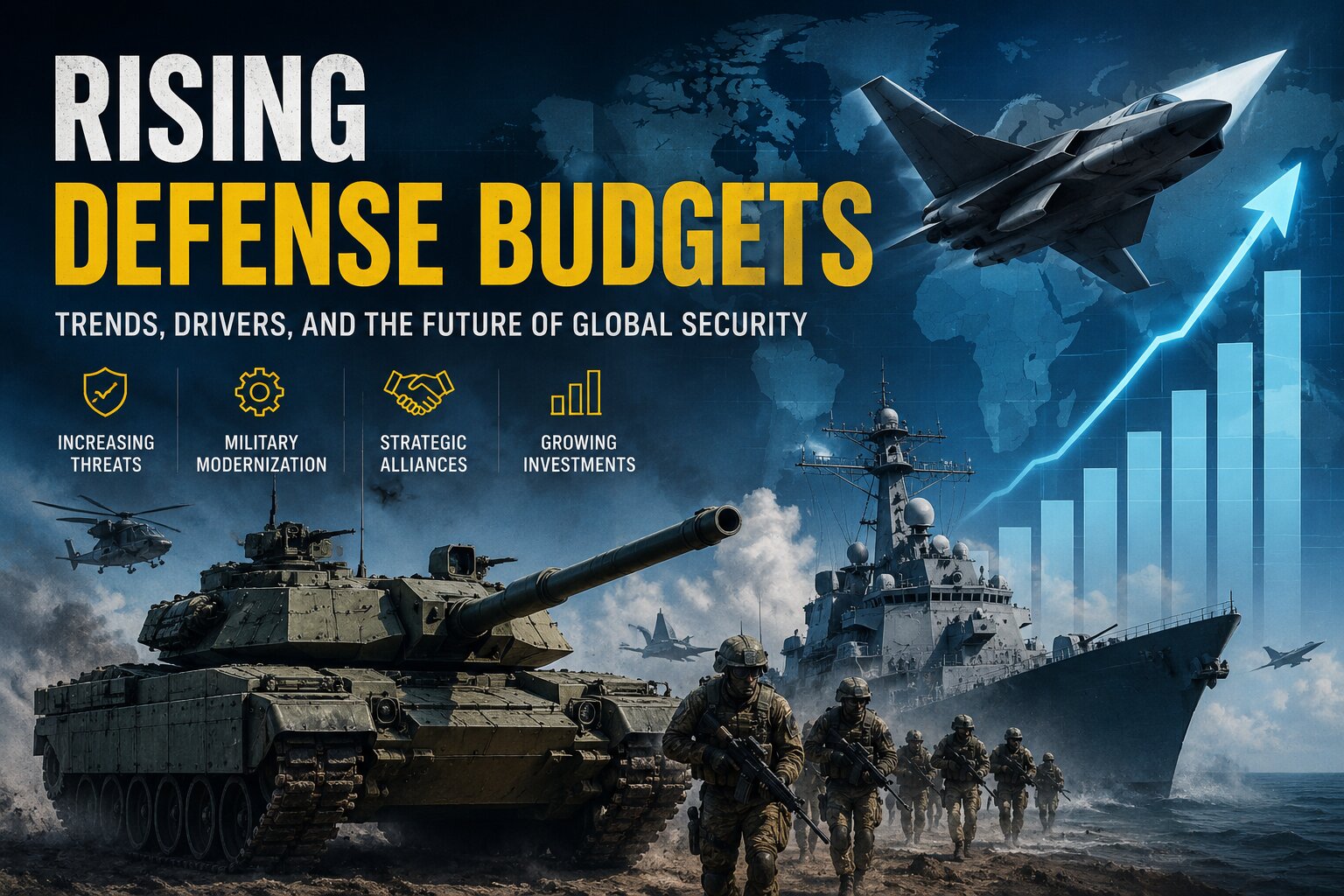
The concept of rising defense budgets has become one of the most important global economic and geopolitical trends of the 21st century. Countries across the world are significantly increasing their military spending and defense expenditure due to escalating tensions, regional conflicts, and technological competition. According to recent global reports, worldwide military spending has reached record levels, surpassing trillions of dollars annually and continuing to grow year after year .
This rise is not random; it reflects a shifting global order where security concerns are becoming a top priority for governments. Nations are investing heavily in advanced weapons, cyber warfare systems, artificial intelligence in defense, and military modernization programs. As a result, rising defense budgets are reshaping global politics, economics, and international relations.
Global Overview of Rising Defense Budgets
Here’s what you need to know:
Record-Breaking Military Spending Worldwide
Global defense expenditure has reached unprecedented levels in recent years. In 2025, global military spending climbed to nearly $2.9 trillion, marking the 11th consecutive year of increase . This growth reflects widespread insecurity and geopolitical instability across multiple regions.
Europe and Asia have been the major drivers of this increase. European nations alone boosted their defense budgets by around 14%, reaching record levels due to security concerns in Eastern Europe and commitments to NATO defense targets . Meanwhile, Asia has also increased military spending due to regional rivalries and strategic competition.
Key Countries Driving the Increase
The largest defense spenders globally include:
- United States
- China
- Russia
Together, these three countries account for more than half of global military expenditure . Their investments heavily influence global security dynamics and push other nations to increase their own defense budgets.
Main Drivers Behind Rising Defense Budget
1. Geopolitical Tensions and Conflicts
One of the biggest reasons for rising defense budgets is ongoing geopolitical instability. Conflicts in Europe, the Middle East, and Asia have created a security environment where countries feel the need to strengthen their military capabilities.
Wars and regional conflicts force governments to increase spending on:
- Weapons and ammunition
- Border security
- Air defense systems
- Intelligence operations
This trend has led to a global “arms race” mentality where nations continuously upgrade their defense systems.
2. Military Modernization and Technology Upgrade
Modern warfare is no longer limited to traditional combat. It now includes:
- Artificial intelligence (AI) warfare systems
- Cybersecurity defense networks
- Drone technology
- Space-based surveillance systems
According to defense industry analysis, countries are shifting their budgets toward technology-driven military systems instead of traditional manpower-heavy forces .
This transformation is one of the strongest reasons behind rising defense budgets worldwide.
3. NATO Commitments and Strategic Alliances
NATO countries have also significantly increased their military spending commitments. Many member states are now aiming to reach or exceed the 2% of GDP defense spending target, with some discussions even pushing for higher benchmarks.
This collective defense strategy has resulted in:
- Higher European military budgets
- Joint military training programs
- Increased weapons procurement
- Stronger defense cooperation among allies
These policies are a major contributor to the global rise in defense expenditure.
4. Technological Competition Between Global Powers
Another major factor is the growing competition between global superpowers. Countries are investing heavily in:
- Hypersonic missile systems
- Advanced fighter jets
- AI-powered defense platforms
- Cyber warfare capabilities
This competition is not only military but also technological, making defense spending a key element of national strategy.
Economic Impact of Rising Defense Budgets
Positive Effects on Industry and Employment
Rising defense budgets have a strong impact on the global economy. The defense industry benefits significantly through:
- Increased government contracts
- Growth of aerospace and defense companies
- Expansion of research and development
- Job creation in engineering and manufacturing sectors
In many countries, defense industries are among the largest employers in the technology and manufacturing sectors.
Growth of the Defense Industry
The global defense sector is experiencing rapid expansion due to increasing military spending. Companies involved in aerospace, cybersecurity, and weapons manufacturing are seeing higher demand and long-term contracts.
Key growth areas include:
- Drone manufacturing
- Missile defense systems
- Cybersecurity infrastructure
- Satellite surveillance systems
This expansion is making defense one of the fastest-growing industrial sectors globally.
Economic Concerns and Budget Pressure
While rising defense budgets support industrial growth, they also create economic challenges:
- Increased government debt in some countries
- Reduced spending on healthcare and education
- Inflationary pressure in national budgets
- Long-term fiscal sustainability concerns
Economists warn that excessive military spending could affect long-term economic development if not managed properly.
Regional Analysis of Rising Defense Budgets
Europe
Europe has seen one of the fastest increases in defense spending in recent years. Countries like Germany and France have significantly expanded their military budgets due to security concerns and NATO obligations.
Germany alone increased its military expenditure by over 20% in recent years, marking a major shift in European defense strategy .
Asia-Pacific Region
Asia is another major region driving rising defense budgets. Countries like China, India, Japan, and South Korea are increasing military spending due to regional tensions and strategic competition.
Key drivers include:
- Territorial disputes
- Naval expansion in the South China Sea
- Nuclear deterrence strategies
Middle East
The Middle East continues to maintain high defense spending due to ongoing conflicts and security challenges. Although growth is slower compared to other regions, military expenditure remains significant.
Future Outlook of Rising Defense Budgets
Continued Growth Expected
Experts predict that global defense budgets will continue to rise over the next decade. This is driven by:
- Persistent geopolitical instability
- Technological arms race
- Expansion of cyber warfare
- Increased military alliances
Shift Toward AI and Digital Warfare
Future defense budgets will likely focus more on:
- Artificial intelligence in combat systems
- Autonomous military drones
- Cyber defense infrastructure
- Space-based defense technologies
This shift will redefine how countries allocate their military spending.
Sustainable Defense Spending Challenges
Governments will face increasing pressure to balance defense spending with:
- Healthcare needs
- Climate change investments
- Economic development programs
Finding this balance will be one of the biggest policy challenges in the coming years.
Conclusion: The Long-Term Impact of Rising Defense Budgets
The trend of rising defense budgets is expected to remain a defining feature of global politics and economics. While it strengthens national security and boosts defense industries, it also raises important questions about global stability and resource allocation.
As nations continue to prioritize security in an uncertain world, military spending will remain a central pillar of government policy. The challenge for the future will be ensuring that this spending contributes not only to defense readiness but also to long-term global peace and economic balance.