
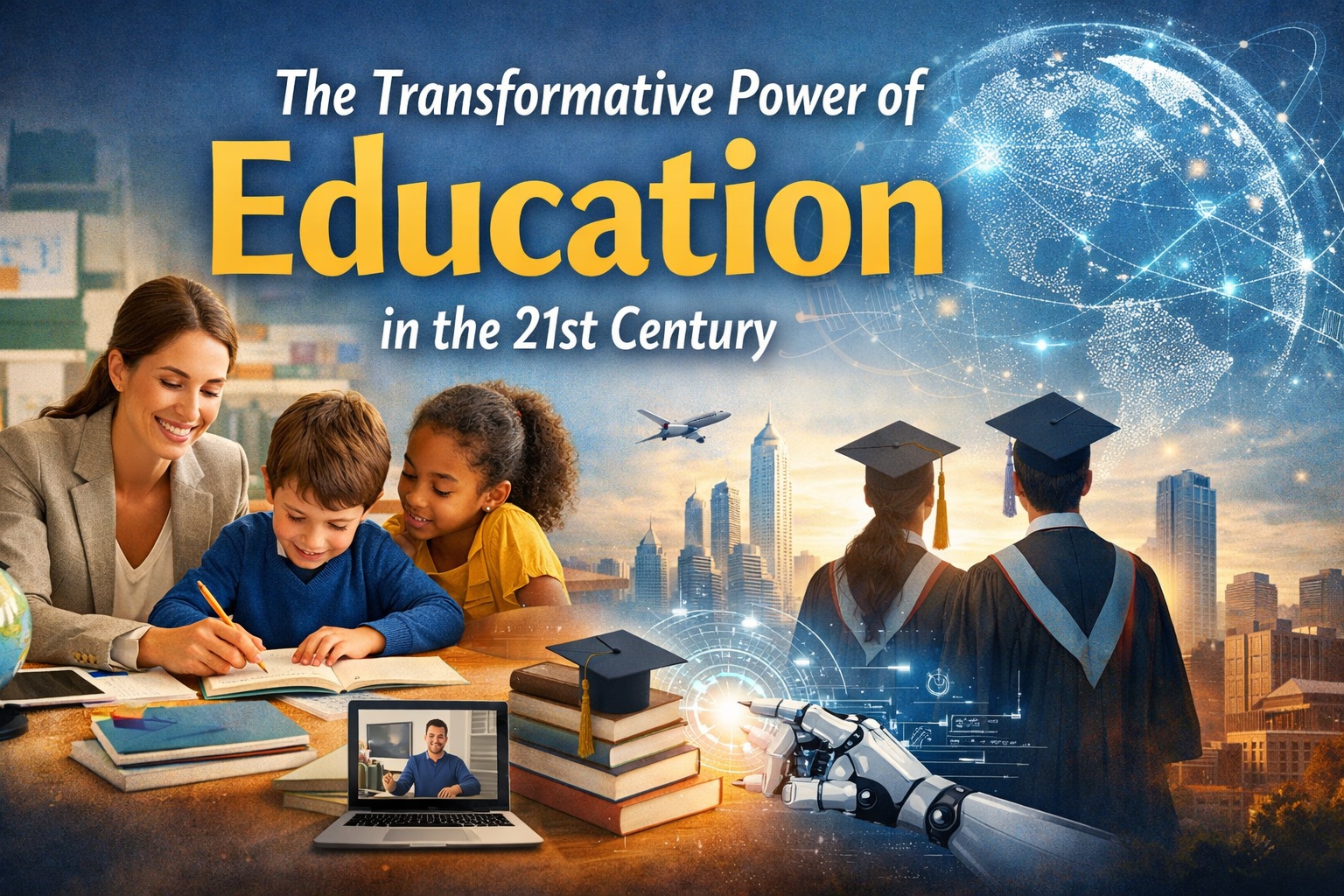
Transformative Power of Education in the 21st Century
Education has long been regarded as the cornerstone of personal growth and societal progress. In the 21st century, its significance has expanded even further as rapid technological advancements, globalization, and shifting economic landscapes demand new skills and deeper understanding. Education is no longer limited to memorizing facts or completing standardized assessments; it is about cultivating critical thinking, creativity, collaboration, and adaptability. Across the globe—from the classrooms of Helsinki to the bustling universities of Tokyo—education systems are evolving to prepare learners for an increasingly complex world.
In today’s interconnected society, education plays a vital role in empowering individuals to reach their full potential. It shapes not only careers but also character, values, and civic responsibility. As economies become knowledge-driven, the demand for educated citizens who can innovate and problem-solve continues to grow. This article explores the evolving landscape of education, its benefits, modern challenges, and the future trends that are redefining how we learn.
The Importance of Education in Personal Development
Here’s what you need to know:
Education serves as the foundation for personal development. From early childhood to higher education, learning experiences influence how individuals think, communicate, and interact with others. Formal education introduces structured knowledge, while informal learning fosters curiosity and creativity. Together, they build a holistic framework for lifelong growth.
Beyond academic achievement, education nurtures essential life skills. Communication, teamwork, emotional intelligence, and time management are cultivated within educational environments. Students learn how to analyze information critically, evaluate diverse perspectives, and make informed decisions. These abilities extend far beyond the classroom and influence relationships, careers, and community involvement.
Moreover, education strengthens self-confidence. When learners acquire knowledge and master new skills, they develop a sense of accomplishment. This confidence encourages them to pursue goals, take initiative, and overcome challenges. Education, therefore, becomes a powerful tool for self-empowerment.
Education and Economic Growth
The Role of Education in Workforce Development
A well-educated workforce is essential for economic prosperity. Countries that invest in education often experience higher productivity, innovation, and competitiveness. For example, nations like Germany have built strong vocational training systems that align education with industry needs, creating skilled professionals who contribute to economic stability.
Education equips individuals with specialized knowledge and technical expertise required in modern industries. Fields such as information technology, healthcare, engineering, and renewable energy depend heavily on advanced education and continuous training. As automation and artificial intelligence reshape industries, the importance of adaptable, well-educated professionals continues to rise.
Reducing Poverty Through Education
Education is one of the most effective tools for breaking the cycle of poverty. When individuals gain access to quality education, they increase their chances of securing stable employment and higher income. This economic upliftment extends to families and communities, contributing to overall societal improvement.
Global organizations such as UNESCO emphasize universal access to education as a fundamental human right. By promoting literacy and educational equity, societies can reduce inequality and create opportunities for marginalized populations.
The Evolution of Modern Education
From Traditional Classrooms to Digital Learning
The traditional classroom model, long defined by textbooks and in-person lectures, has undergone profound changes in recent years. The emergence of digital technologies first brought online learning platforms, virtual classrooms, and interactive tools, significantly expanding educational access—as seen with institutions like Harvard University offering online courses to students worldwide, transcending geographical limits.
Today, AI Governance in Higher Education plays a pivotal role in shaping the next phase of this transformation, ensuring that artificial intelligence tools are integrated responsibly and ethically to enhance teaching, learning, and institutional operations while addressing concerns such as academic integrity, data privacy, and equitable access.
The integration of technology in education has enhanced flexibility and accessibility. Students can learn at their own pace, revisit recorded lectures, and access a vast array of digital resources. This shift has been particularly significant during global disruptions, such as the COVID-19 pandemic, which accelerated the adoption of remote learning.
The Rise of Personalized Learning
Modern education increasingly focuses on personalized learning approaches. Instead of a one-size-fits-all model, educators are leveraging data analytics and adaptive technologies to tailor instruction to individual needs. Personalized learning recognizes that students have diverse strengths, interests, and learning styles.
By providing customized feedback and flexible learning pathways, educators can support student engagement and academic success more effectively. This approach not only improves outcomes but also fosters a deeper connection between learners and their educational journeys.
Challenges Facing Education Today
Educational Inequality
Despite significant progress, educational inequality remains a pressing global issue. Access to quality education often depends on socioeconomic status, geographic location, and infrastructure availability. Rural areas in developing regions may lack adequate schools, trained teachers, and learning materials.
Efforts by international bodies such as World Bank aim to address these disparities by funding educational initiatives and infrastructure projects. However, sustainable change requires long-term commitment from governments, communities, and stakeholders.
The Digital Divide
While technology has enhanced learning opportunities, it has also exposed a digital divide. Students without reliable internet access or digital devices face significant disadvantages in online learning environments. Bridging this gap is crucial to ensuring equitable education in a digital age.
Governments and private organizations must collaborate to provide affordable connectivity and digital literacy training. Without such efforts, technological advancements may inadvertently widen existing inequalities.
Mental Health and Academic Pressure
Another growing concern in education is the mental well-being of students. Academic pressure, competition, and societal expectations can contribute to stress and anxiety. Educational institutions must prioritize holistic development, incorporating mental health support and balanced learning environments.
The Role of Teachers in Modern Education
Teachers remain the backbone of the education system. Despite technological advancements, the human element in teaching cannot be replaced. Effective educators inspire curiosity, mentor students, and create inclusive environments where learners feel valued.
Professional development and continuous training are essential to help teachers adapt to evolving educational demands. Innovative pedagogical methods, such as project-based learning and experiential education, empower teachers to foster active engagement and critical thinking.
Furthermore, teachers serve as role models. Their guidance shapes students’ attitudes toward learning and personal growth. Investing in teacher training and well-being is, therefore, fundamental to improving educational outcomes.
Education and Global Citizenship
In an interconnected world, education plays a pivotal role in promoting global citizenship. Students must understand cultural diversity, environmental sustainability, and social responsibility. Education fosters awareness of global challenges such as climate change, inequality, and public health crises.
International collaboration among institutions encourages cross-cultural exchange and mutual understanding. Study abroad programs, global research partnerships, and digital collaborations connect students across borders, preparing them to navigate a globalized society.
The Future of Education
Lifelong Learning
The concept of lifelong learning is gaining prominence as careers evolve and new skills become necessary. Education no longer ends with a degree; continuous professional development is essential for staying relevant in dynamic industries.
Online platforms, micro-credentials, and certification programs allow individuals to update their skills throughout their lives. This shift reflects a broader understanding that learning is a continuous process rather than a finite stage.
Artificial Intelligence and Automation in Education
Artificial intelligence (AI) is transforming educational practices. AI-powered tools can analyze student performance, provide instant feedback, and recommend personalized learning resources. While technology enhances efficiency, it must be integrated thoughtfully to preserve human interaction and ethical standards.
Automation also demands new skill sets, including digital literacy and problem-solving abilities. Education systems must adapt curricula to prepare students for emerging technologies and evolving job markets.
Conclusion
Education remains one of the most powerful forces for transformation in society. It shapes individuals, strengthens economies, and fosters social cohesion. In the 21st century, education must evolve to meet new challenges while preserving its fundamental mission: empowering learners to think critically, act responsibly, and pursue meaningful lives.
As technology continues to reshape the world, the essence of education—curiosity, discovery, and growth—remains constant. By addressing inequalities, supporting educators, and embracing innovation, societies can build education systems that equip future generations for success. Ultimately, education is not merely preparation for life; it is life itself, continuously unfolding with every lesson learned.


One Comment
Comments are closed.