Anwar Gargash: Attacks on Gulf States Reveal Iran’s Weakness
Rising Tensions in the Gulf Put Iran Under the Spotlight
Here’s what you need to know:
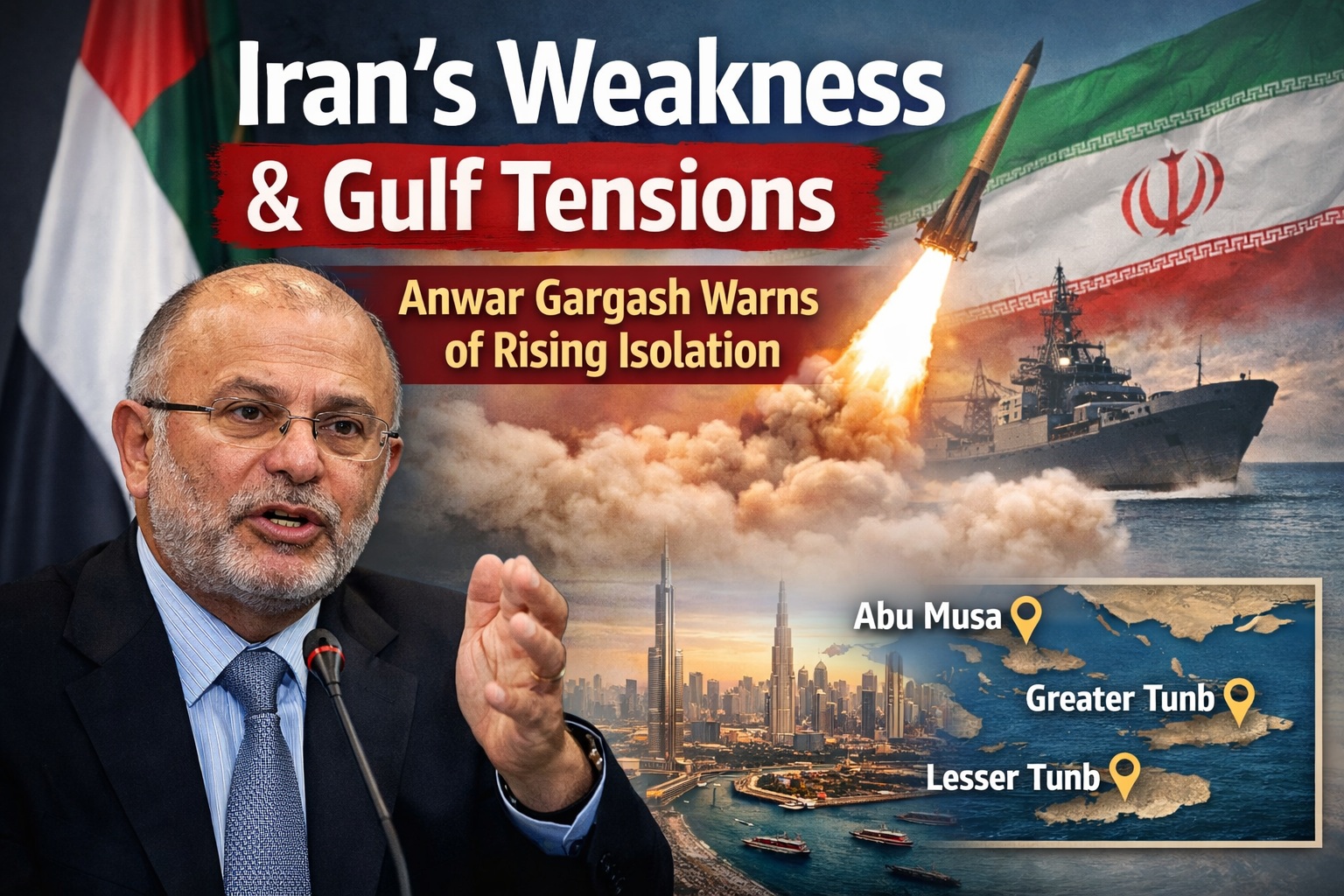
Senior Emirati diplomat Anwar Gargash has warned that recent attacks targeting Gulf countries reveal the “strategic weakness” of Iran and highlight the country’s increasing regional isolation.
Speaking during a policy discussion in the Middle East, Gargash — a senior diplomatic adviser to the president of the United Arab Emirates — argued that instability and attacks across the Gulf ultimately damage Tehran’s standing rather than strengthening it.
The comments come amid renewed concerns over security in the region, including threats to maritime trade, energy infrastructure, and cities such as Dubai.
For UK readers, the issue carries global significance. The Gulf region supplies a large share of the world’s energy, and tensions between Gulf states and Iran often affect oil prices, international shipping routes, and geopolitical stability.
Gargash: Attacks Demonstrate Iran’s Strategic Weakness
According to Gargash, recent hostilities targeting Gulf states demonstrate that Iran’s regional influence is under pressure. Instead of strengthening Tehran’s strategic position, such actions reinforce the perception that the country is becoming increasingly isolated.
He argued that:
Military or proxy attacks only deepen diplomatic isolation
Gulf countries are strengthening alliances and defensive capabilities
Regional cooperation is growing despite tensions
“These actions highlight the strategic weakness of Iran rather than strength,” Gargash said in remarks reported by regional media.
His comments reflect the UAE’s long-standing stance that stability and diplomacy — rather than confrontation — should guide relations in the Gulf.
Is the UAE Under Threat?
One of the key questions raised by analysts and observers is: Is the UAE under threat?
Security experts say the UAE faces periodic risks due to its economic prominence, global connectivity, and proximity to regional conflicts. However, analysts emphasize that the country maintains one of the strongest defense systems in the Middle East.
Several factors mitigate the threat level:
Advanced air defence and surveillance systems
Strategic partnerships with Western allies
Strong intelligence cooperation across the Gulf
The UAE also works closely with regional organizations such as the Gulf Cooperation Council to coordinate security responses.
For international investors and trading partners — including the UK — maintaining stability in the UAE remains a priority due to its role as a financial and logistics hub linking Europe, Asia, and Africa.
Does the UAE Get Along With Iran?
Despite tensions, the relationship between the UAE and Iran is complex rather than purely hostile.
So does the UAE get along with Iran? The answer is nuanced.
The UAE has maintained economic and diplomatic engagement with Iran for decades, even during periods of political disagreement.
Key aspects of the relationship include:
Significant trade ties between Iranian businesses and Dubai
Diplomatic communication channels between both governments
Periodic political tensions over regional security issues
Trade between the two countries has historically been substantial. Dubai has long served as an important commercial gateway for Iranian businesses, especially during periods of international sanctions.
However, disagreements over territorial claims and regional policies continue to complicate the relationship.
Why Did Dubai Get Attacked?
Another question frequently asked in the context of regional tensions is: Why did Dubai get attacked?
Dubai itself has rarely been the direct target of major attacks. However, the city’s economic importance makes it symbolically significant in any regional conflict.
Analysts say potential motivations behind threats or attempted attacks could include:
Disrupting global trade routes
Targeting financial centres connected to international markets
Sending political messages during periods of regional tension
Dubai is home to one of the world’s busiest airports and one of the largest ports in the Middle East, making it a crucial hub for global commerce.
Because of this strategic importance, the UAE has invested heavily in security and surveillance technologies to protect key infrastructure.
The Long-Standing Dispute Over Three Gulf Islands
Another major point of contention between Iran and the UAE concerns three small islands in the Persian Gulf:
Abu Musa
Greater Tunb
Lesser Tunb
This dispute dates back to 1971, when Iran took control of the islands shortly before the formation of the UAE.
The issue continues to shape political relations today.
Why Did Iran and the UAE Fight Over Three Tiny Islands?
Many observers ask: Why did Iran and the UAE fight over three tiny islands?
Despite their small size, the islands are strategically important because they sit near vital shipping routes through the Strait of Hormuz — one of the world’s most critical oil transit chokepoints.
Control of the islands provides:
Strategic oversight of shipping lanes
Potential military advantages in the Gulf
Influence over regional maritime security
The UAE continues to assert sovereignty over the islands and has repeatedly called for peaceful negotiations or international arbitration.
Iran, however, maintains that the islands are part of its territory.
Regional Stability Matters for Global Energy Markets
For the UK and Europe, tensions between Iran and Gulf states are more than a regional issue. The Persian Gulf region accounts for roughly one-third of the world’s seaborne oil shipments.
Any escalation could affect:
Global oil prices
Shipping insurance costs
Energy supply chains
The UK government has consistently supported diplomatic solutions and freedom of navigation in the Gulf.
Experts say maintaining stability in the region is essential for global economic security.
Growing Diplomatic Isolation for Iran?
Gargash’s remarks reflect a broader narrative emerging among Gulf officials — that Iran’s aggressive posture risks pushing it further into diplomatic isolation.
Regional analysts point to several developments:
Strengthening Gulf-Western security partnerships
Increased regional cooperation among Arab states
Diplomatic efforts to de-escalate tensions through dialogue
However, many experts stress that long-term stability will depend on diplomatic engagement rather than confrontation.
Conclusion
Comments from Anwar Gargash highlight the delicate geopolitical balance in the Gulf. While tensions between the United Arab Emirates and Iran remain unresolved, leaders across the region continue to emphasize stability, diplomacy, and economic cooperation.
For global partners such as the UK, developments in the Gulf are closely watched due to their implications for international trade, energy markets, and geopolitical security.
Whether current tensions escalate or lead to renewed dialogue may shape the region’s future — and influence global politics far beyond the Middle East.