Autumn Budget 2026: Date, Time and What to Expect from John Healey’s First Budget
Last updated: 25 October 2026. We will update this article with the key announcements on Budget day.
Chancellor John Healey will deliver the Autumn Budget 2026 on Wednesday 28 October 2026. It is his first Budget as Chancellor and comes as inflation has risen again and households continue to feel pressure on their finances. Here is what we know so far, what has already been announced and what is only rumoured.
Autumn Budget 2026 at a glance
Here’s what you need to know:
| Date | Wednesday 28 October 2026 |
| Delivered by | Chancellor of the Exchequer John Healey |
| Time | Budget statements normally begin shortly after Prime Minister’s Questions, usually around 12.30pm |
| Forecast | The Office for Budget Responsibility (OBR) publishes its Economic and Fiscal Outlook on the same day |
| Where to watch | Live on Parliament TV and major UK news channels; documents are published on GOV.UK after the speech |
The economic background
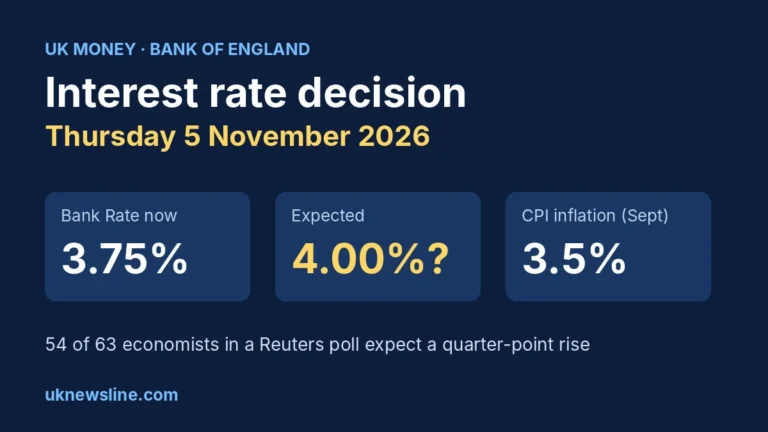
The Budget arrives just a week after the latest inflation figures. According to the Office for National Statistics, Consumer Prices Index (CPI) inflation rose to 3.5% in September 2026, up from 3.1% in August. The biggest upward pressure came from transport, with motor fuel prices 29.8% higher than a year earlier.
The September inflation figure matters because it is normally used to decide how much many working-age benefits rise the following April. Higher inflation also affects the Bank of England’s interest rate decisions; the next one is due on 5 November. Read our guide: Bank of England interest rate decision on 5 November 2026.
The Chancellor has said the Budget will comply with the government’s fiscal rules and keep a buffer against economic uncertainty.
What has already been announced
Several measures have been announced or confirmed before Budget day, including:
- VAT on electricity: VAT has been removed from domestic electricity bills from 1 October for the rest of the financial year.
- Bus fares: a £2 cap on bus fares.
- Income tax rates: the Prime Minister has committed to Labour’s manifesto pledge not to raise the rates of income tax.
- First-time buyers: a proposed “Your First Home” scheme in England, with a 2.5% deposit and a government-backed equity loan of 20% of the property value. Costs and the launch date are expected in the Budget.
- Expensive homes: a previously announced council tax surcharge in England from 2028 for homes worth over £2 million, ranging from £2,500 a year to £7,500 a year for homes over £5 million.
- Cash ISAs: the cash ISA allowance for under-65s is due to fall to £12,000 from April 2027.
- Pensions and inheritance tax: unused pension pots are due to come into the inheritance tax net from April 2027.
- Local government: English regional mayors will receive a share of income tax revenue, and mayors will be able to introduce an overnight visitor levy.
What is rumoured (not confirmed)
Newspapers and commentators have reported a number of possible measures. None of these are confirmed until the Chancellor announces them:
- Personal allowance: the Prime Minister has said it will be reviewed, but there is no commitment to change it.
- Business rates: reports suggest the small business rates threshold could rise from £12,000 to £18,000.
- Warm Home Discount: reports suggest the £150 discount could rise by £100.
- Banks: the bank corporation tax surcharge could rise from 3%, with an increase to the bank levy reported as an alternative.
- Online marketplaces: VAT could be collected at source for third-party sellers with turnover above £90,000.
- Capital gains tax and the “mansion tax” threshold: aligning capital gains tax with income tax and lowering the £2 million surcharge threshold have both been discussed, but some reports say these ideas have been ruled out.
What it could mean for pensioners
The state pension rises each April under the triple lock, by the highest of earnings growth, CPI inflation or 2.5%. The Prime Minister has said he intends to replace the triple lock with a double lock from April 2030, so the triple lock is expected to apply for the next few years. Pensions Minister Torsten Bell has said pensioners whose only income is the state pension will not have to pay income tax on it. Look out for confirmation of the April 2027 state pension rate in the Budget documents.
If you are on a low income or receive pension credit, see our guide to the Winter Fuel Payment 2026.
What it could mean for households
- Energy bills: check our guide to the energy price cap from October 2026.
- Tax returns: if you are self-employed or have income outside PAYE, see the Self Assessment deadlines for 2027.
- Savers: plan ahead for the lower cash ISA allowance from April 2027.
- Homebuyers: watch for details of the “Your First Home” scheme.
Frequently asked questions
When is the Autumn Budget 2026?
The Autumn Budget 2026 is on Wednesday 28 October 2026.
What time does the Budget start?
The Chancellor normally begins the Budget speech shortly after Prime Minister’s Questions, usually around 12.30pm.
Will income tax go up?
The government has committed not to raise the rates of income tax. Other changes, such as to allowances or thresholds, are only confirmed when they are announced.
Where can I read the official Budget documents?
HM Treasury publishes the Budget documents on GOV.UK after the speech, and the OBR publishes its forecast on its website on the same day.
Sources: ONS – Consumer price inflation, September 2026; Which? – Autumn Budget 2026; PensionBee – Autumn Budget 2026.