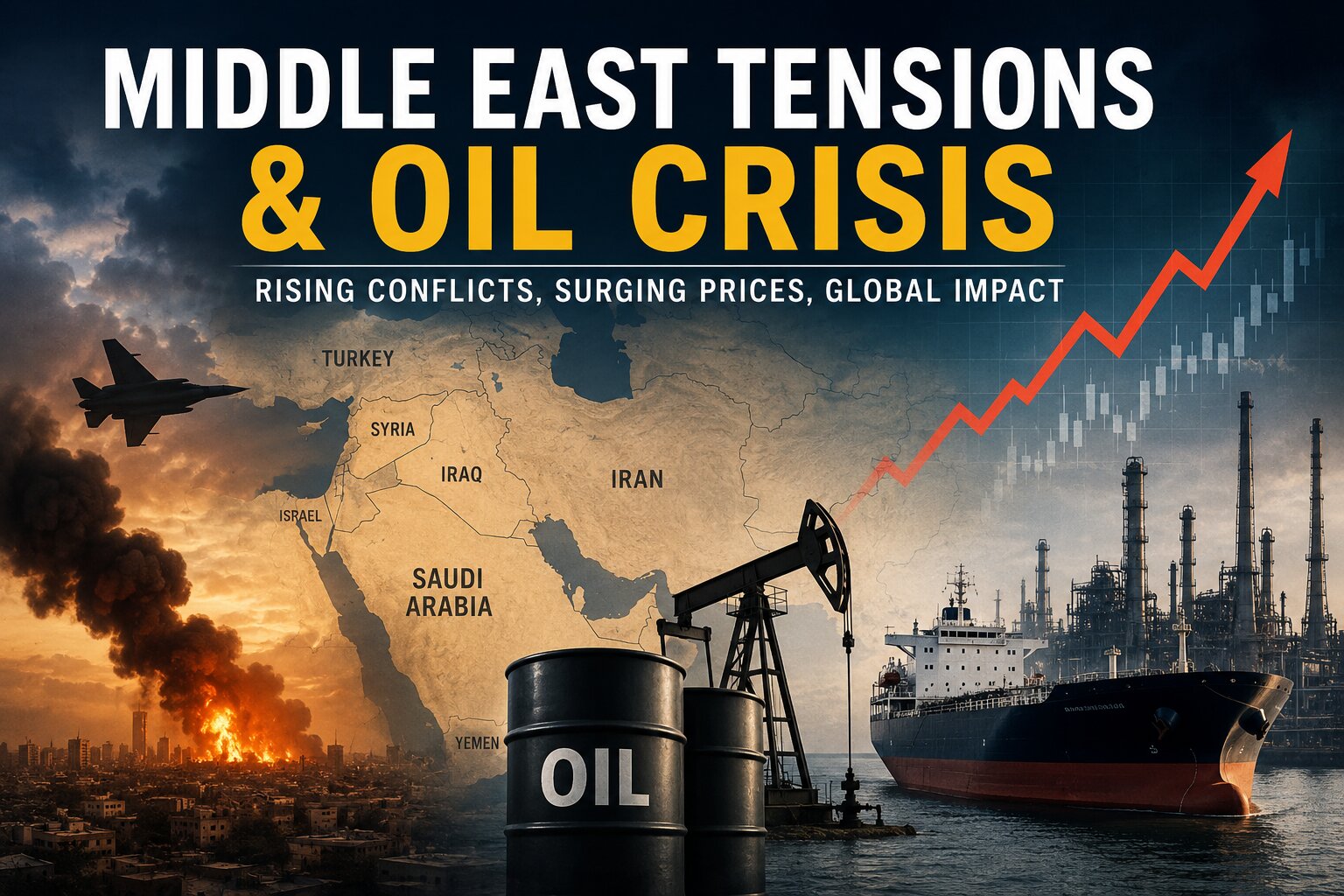
Middle East Tensions & Oil Crisis
The issue of Middle East Tensions & Oil Crisis has once again taken center stage in global discussions, affecting economies, politics, and energy security worldwide. The Middle East has long been a critical hub for global oil production, and any instability in the region has immediate ripple effects across international markets. From conflicts and political rivalries to sanctions and strategic alliances, multiple factors are driving uncertainty. Countries heavily dependent on oil imports—particularly in Europe and Asia—are feeling the pressure as prices fluctuate and supply chains become less predictable. This growing crisis is not just about energy; it also reflects deeper geopolitical shifts that are reshaping the balance of power globally.
Historical Context of Middle East Tensions & Oil Crisis
Here’s what you need to know:
The Roots of Instability
To understand the current Middle East Tensions & Oil Crisis, it is essential to look at the historical context. The region has experienced decades of conflict, from the Gulf War to the Iraq War, both of which significantly disrupted global oil supplies. Political instability, territorial disputes, and ideological differences have consistently fueled tensions among key players such as Saudi Arabia and Iran. These rivalries often escalate into proxy conflicts, further destabilizing the region.
Oil as a Strategic Weapon
Oil has historically been used as a strategic tool in geopolitical conflicts. The 1973 Oil Embargo demonstrated how oil supply restrictions could cripple global economies. Today, similar tactics are being considered or indirectly implemented through production cuts, sanctions, and trade restrictions. This highlights how deeply interconnected energy and politics are in the Middle East.
Current Developments Driving the Crisis
Rising Geopolitical Conflicts
The present Middle East Tensions & Oil Crisis is largely driven by escalating geopolitical conflicts. Disputes involving Iran, Israel, and Gulf nations have heightened the risk of military confrontations. The involvement of global powers like the United States and Russia has further complicated the situation. These countries have strategic interests in the region, particularly in securing energy routes and maintaining influence over oil production.
Disruptions in Oil Supply
One of the most immediate consequences of rising tensions is the disruption of oil supply chains. Key transit points such as the Strait of Hormuz are under constant threat. This narrow passage handles a significant portion of the world’s oil shipments, making it a critical chokepoint. Any disruption here can lead to sharp increases in oil prices, affecting industries and consumers globally.
Economic Sanctions and Policy Shifts
Sanctions imposed on countries like Iran have restricted their ability to export oil, reducing global supply. At the same time, production decisions by organizations such as OPEC and its allies influence market stability. Recent production cuts aimed at controlling prices have added another layer of complexity to the crisis.
Global Economic Impact of Middle East Tensions & Oil Crisis
Rising Oil Prices and Inflation
The Middle East Tensions & Oil Crisis has led to a surge in oil prices, which directly impacts global inflation. Higher fuel costs increase transportation expenses, leading to higher prices for goods and services. Countries like United Kingdom and Pakistan are particularly vulnerable due to their reliance on imported energy. This has resulted in increased cost of living and economic strain on households.
Impact on Global Markets
Stock markets and financial systems are also affected by fluctuations in oil prices. Energy companies may benefit from higher prices, but industries dependent on fuel—such as aviation and logistics—face increased costs. The uncertainty surrounding the crisis discourages investment and slows economic growth, especially in developing nations.
Energy Security Concerns
Energy security has become a major concern for many countries. Governments are now focusing on diversifying their energy sources and reducing dependence on Middle Eastern oil. Investments in renewable energy and alternative fuels are accelerating, but the transition will take time. In the short term, the world remains heavily reliant on oil from this volatile region.
Regional Consequences of the Crisis
Political Instability
The Middle East Tensions & Oil Crisis is exacerbating political instability within the region. Governments facing economic challenges due to reduced oil revenues may struggle to maintain public support. This can lead to protests, regime changes, or increased authoritarian measures.
Social and Humanitarian Impact
Rising tensions often result in humanitarian crises, including displacement and loss of livelihoods. Conflict-affected areas face shortages of essential goods, including fuel, food, and medical supplies. The crisis thus has far-reaching social implications beyond economic concerns.
Shifts in Alliances
The evolving crisis is also reshaping alliances in the Middle East. Countries are forming new partnerships to secure their interests, while traditional alliances are being tested. This dynamic environment adds unpredictability to the region’s future.
Future Outlook: What Lies Ahead?
Possible Scenarios
The future of the Middle East Tensions & Oil Crisis depends on several factors, including diplomatic efforts, military developments, and global energy trends. A peaceful resolution could stabilize oil markets and reduce economic uncertainty. However, escalation of conflicts could lead to severe supply disruptions and a prolonged global crisis.
Role of Renewable Energy
One potential long-term solution lies in reducing dependence on oil. Countries are increasingly investing in renewable energy sources such as solar and wind power. While this shift will not immediately resolve the crisis, it represents a strategic move toward greater energy independence.
Importance of Diplomacy
Diplomatic efforts will play a crucial role in resolving tensions. International organizations and global powers must work together to promote stability and prevent conflict escalation. Dialogue and cooperation are essential for ensuring a sustainable solution to the crisis.
Conclusion: Navigating the Middle East Tensions & Oil Crisis
The Middle East Tensions & Oil Crisis is a complex and multifaceted issue with global implications. It highlights the fragile nature of energy security and the interconnectedness of geopolitics and economics. While the crisis presents significant challenges, it also offers an opportunity for countries to rethink their energy strategies and invest in sustainable alternatives. As the world watches closely, the actions taken in the coming months will determine the trajectory of global energy markets and economic stability.