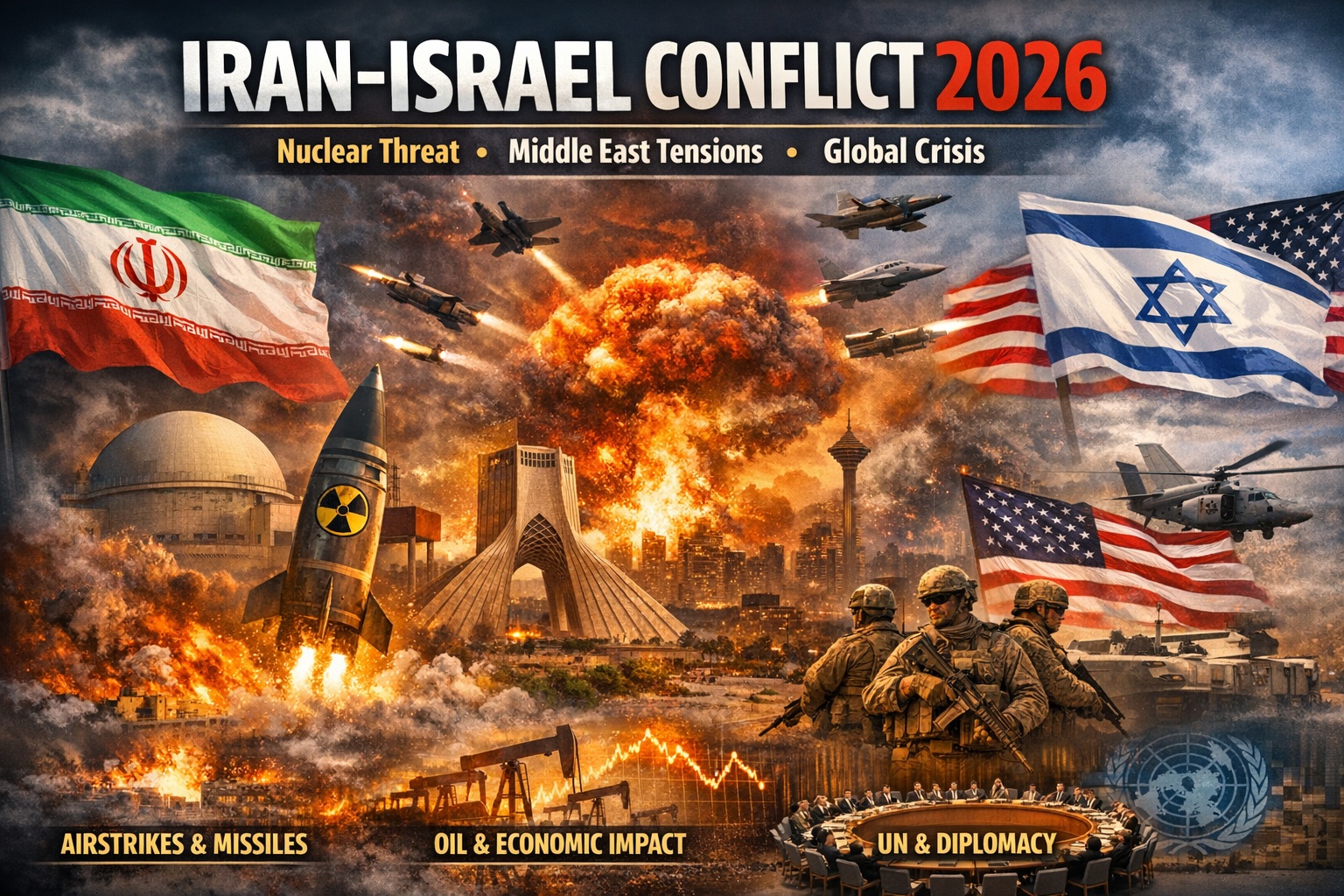
Iran Israel Conflict 2026
Which Countries Are Involved?
Here’s what you need to know:
This rising tension mainly involves Iran, Israel, and the United States.
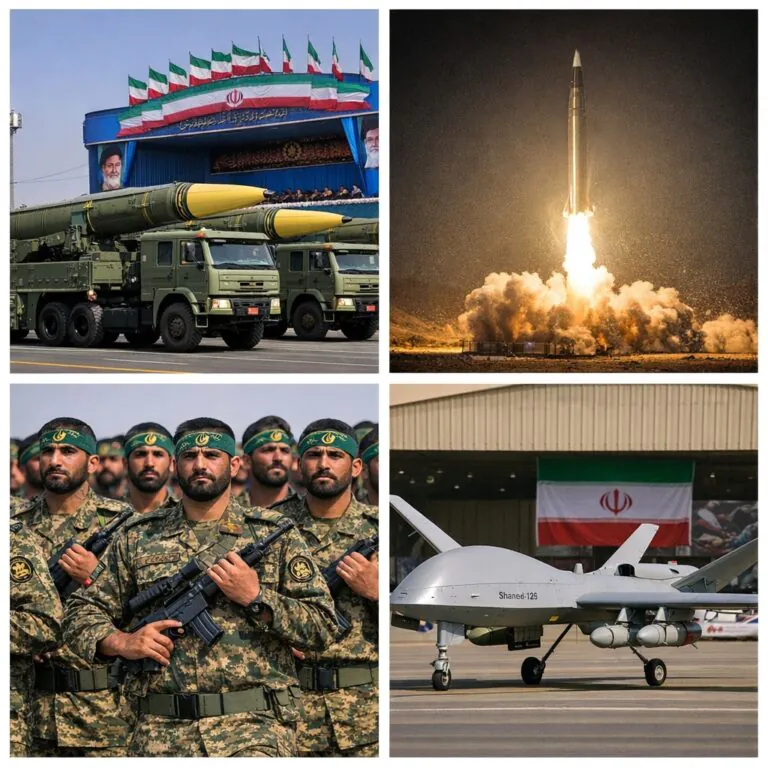
Israel and the united States claim that Iran is expanding its nuclear and missile programs aggressively. Iran, on the other hand, states that it is strengthening its defense capabilities and has no intention of initiating aggression.
Background of the Conflict
This issue did not start recently. Tensions between Iran and Israel have existed for many years.
Key Background Factors:
Disputes over Iran’s nuclear program
Regional power competition in the Middle East
Proxy conflicts in neighboring countries
Economic sanctions and political pressure
Israel is concerned that if Iran develops nuclear weapon capability, the balance of power in the region could shift significantly.
The Nuclear Program Dispute
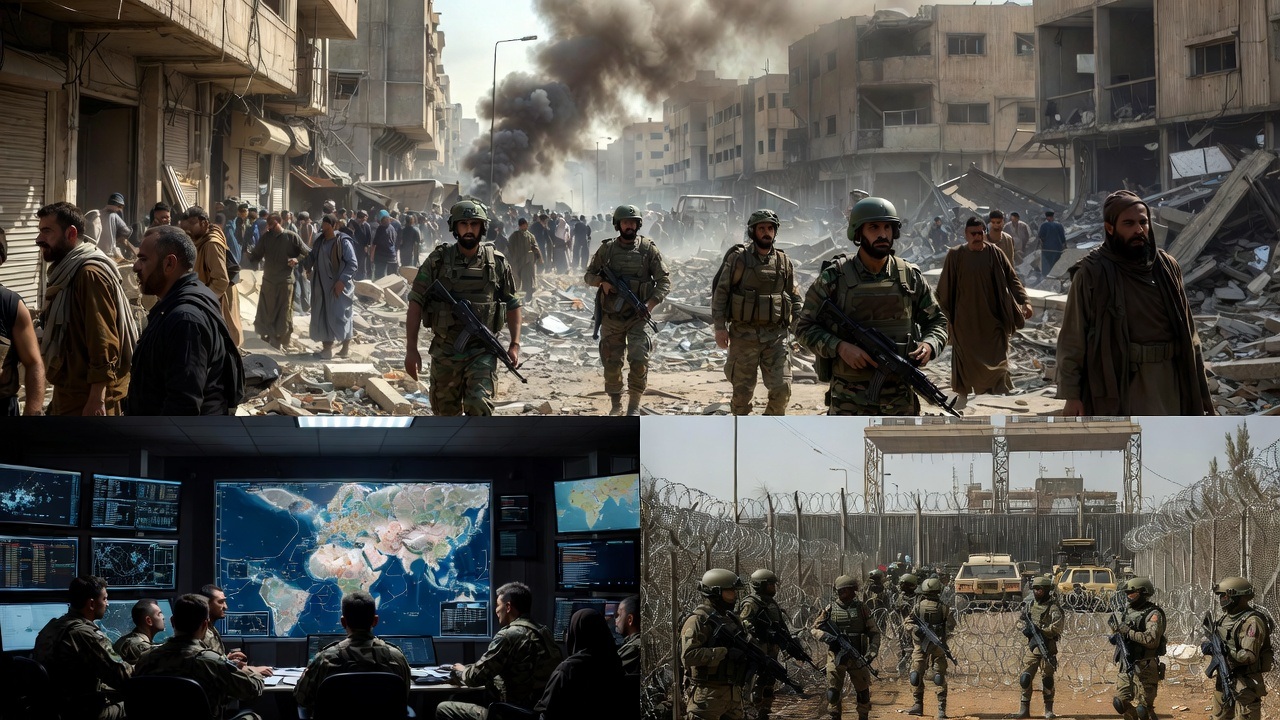
Iran maintains that its nuclear program is intended for peaceful purposes, such as energy production. However, Israel and the United States suspect that the program may have military dimensions. Because of these concerns, sanctions were imposed in the past, negotiations were held, and agreements were signed, but no long-term permanent solution was achieved.
Recent Military Escalation
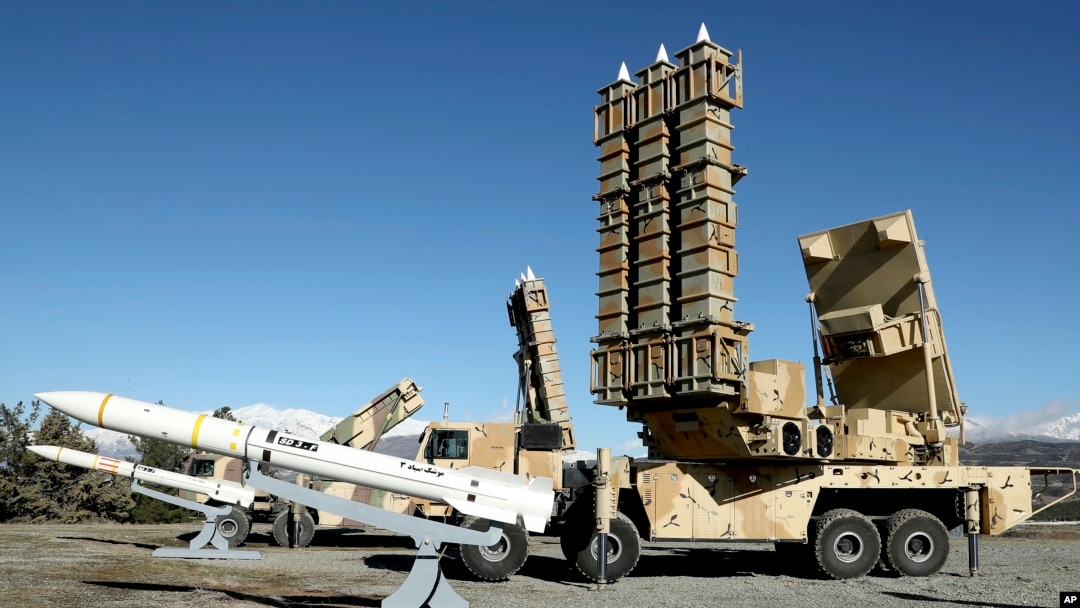
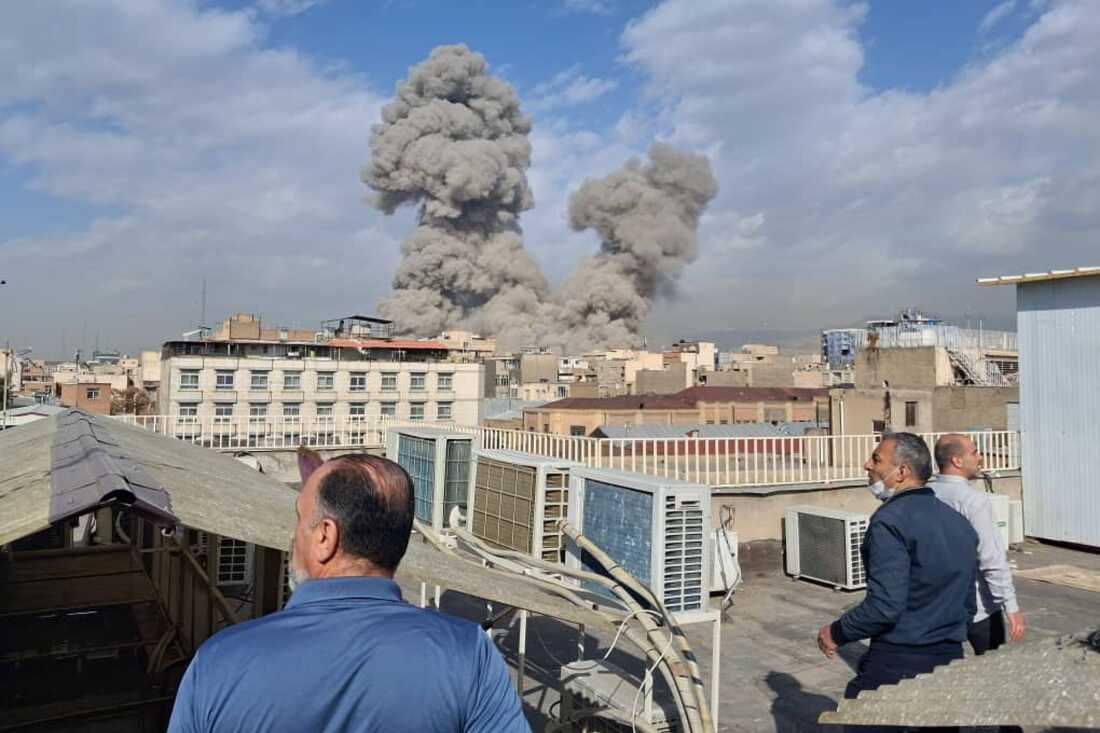
In 2026, the situation became more serious when reports emerged of:
Air strikes
Missile system activations
Drone operations
Targeting of military installations
Iran reportedly responded with missile and drone actions of its own. As a result, the situation escalated from tension to a broader regional crisis.
Impact on the Middle East
This conflict is not limited to just three countries. The entire Middle East region feels the pressure because:
Oil routes are highly sensitive
The Persian Gulf is strategically important
Trade and shipping routes may be disrupted
Regional alliances could become active
If the conflict intensifies, global oil prices may rise significantly.
Global Reaction
The international community is closely monitoring the situation.
The United Nations has called for de-escalation and an immediate ceasefire.
Several European countries have also urged restraint, warning that a full-scale war could severely impact the global economy.
Economic Consequences
Conflicts of this scale usually affect global markets immediately:
Oil prices increase
Stock markets decline
Gold prices rise
Currency markets become volatile
Countries that rely heavily on oil imports may face inflation and economic pressure.
Humanitarian Concerns
The greatest impact of war is often on civilians:
Civilian casualties
Damage to infrastructure
Communication disruptions
Flight cancellations and travel restrictions
If the conflict continues for a prolonged period, it could lead to a refugee crisis.
Could This Turn Into a World War?
At present, this is not a declared world war.
However, analysts warn that the situation could become more dangerous if:
More countries become directly involved
A large-scale ground invasion begins
Major oil supplies are disrupted
For now, diplomatic channels are still open, and global powers are attempting to prevent further escalation.
You may also read: Russia Ukrain War
Possible Future Scenarios
1. Diplomatic Resolution
A ceasefire could be agreed upon, followed by negotiations.
2. Limited Ongoing Conflict
Missile and drone exchanges could continue without full-scale war.
3. Full Regional War
Multiple countries could become involved, expanding the conflict.
The world is now watching closely to see whether diplomacy succeeds or tensions escalate further.