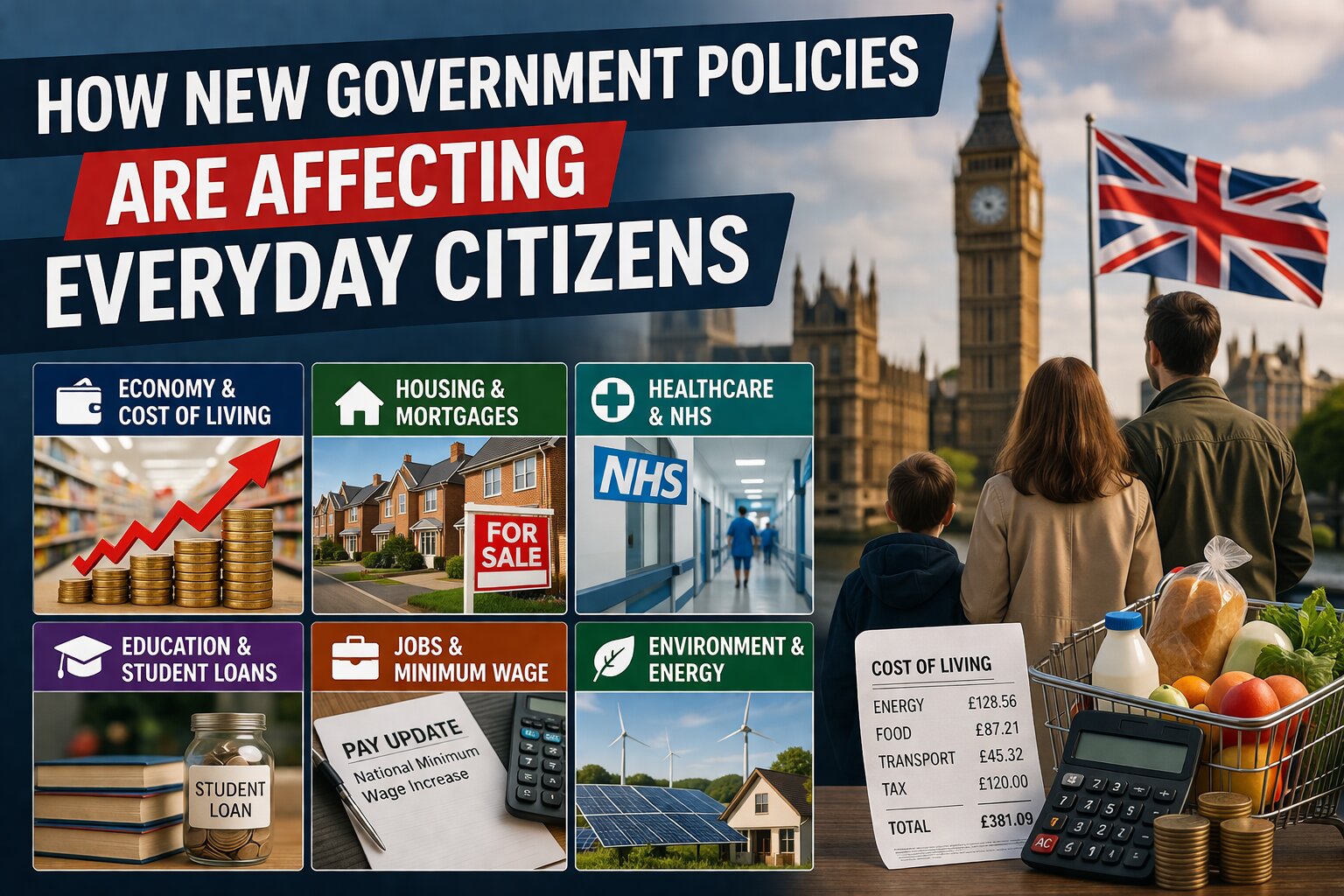
How New Government Policies Are Affecting Everyday Citizens
How New Government Policies Are Affecting Everyday Citizens
Here’s what you need to know:
Introduction
Government policies play a crucial role in shaping the daily lives of citizens, often influencing everything from the cost of living to access to public services. In recent years, the UK has introduced a series of new government policies aimed at stabilizing the economy, addressing social challenges, and preparing for future growth. However, the real question remains: how are these changes impacting everyday citizens? Understanding how new government policies are affecting everyday citizens is essential for individuals trying to navigate financial pressures, job markets, and lifestyle changes in a rapidly evolving environment. This article explores the direct and indirect effects of these policies, offering a comprehensive look at how they are reshaping daily life across the UK.
Economic Policies and Their Impact on Households
Rising Costs and Inflation Control Measures
One of the most noticeable ways how new government policies are affecting everyday citizens is through economic reforms aimed at controlling inflation. While these policies are designed to stabilize the economy, many households are experiencing rising costs in essentials such as food, energy, and transportation. Government interventions, such as energy price caps and subsidies, have provided some relief, but they often fall short of fully offsetting increased living expenses. As a result, families are adjusting their budgets, cutting back on non-essential spending, and seeking alternative ways to manage their finances.
Tax Changes and Disposable Income
Taxation policies have also played a significant role in determining how much money citizens have available to spend. Adjustments in income tax thresholds, national insurance contributions, and VAT rates directly influence disposable income. For many individuals, these changes mean tighter financial conditions, especially for middle-income households that may not qualify for additional support schemes. Consequently, understanding how new government policies are affecting everyday citizens requires a close look at how tax structures impact financial stability and long-term planning.
Housing Policies and Living Conditions
Property Market Regulations
Housing remains one of the most critical areas where government policies have a direct impact. Recent measures aimed at regulating the property market, including mortgage rate adjustments and housing supply initiatives, have significantly influenced affordability. First-time buyers, in particular, face challenges entering the market due to higher interest rates and stricter lending criteria. This highlights another dimension of how new government policies are affecting everyday citizens, especially younger generations striving for homeownership.Rental Market Pressures
For renters, policy changes have led to increased scrutiny of landlords and improved tenant protections. While these measures are intended to create fairer housing conditions, they have also contributed to rising rental prices in some areas. Landlords often pass on additional costs to tenants, making it more difficult for individuals to find affordable accommodation. As a result, housing policies continue to shape living standards and financial stress levels for millions across the UK.
Healthcare Policies and Public Well-being
NHS Funding and Accessibility
Healthcare is another area where citizens feel the effects of policy changes. Increased funding for the NHS aims to improve services, reduce waiting times, and enhance patient care. However, challenges such as staff shortages and high demand persist, meaning that the benefits of these policies are not always immediately visible. Examining how new government policies are affecting everyday citizens reveals that while long-term improvements are planned, short-term access to healthcare remains a concern for many.
Mental Health Initiatives
In addition to physical healthcare, government policies have increasingly focused on mental health support. Expanded access to counseling services and awareness campaigns have helped reduce stigma and encourage individuals to seek help. These initiatives demonstrate a positive shift in addressing public well-being, although their effectiveness depends on consistent funding and implementation.
Education Policies and Opportunities
Changes in School Funding
Education policies have a profound impact on students, parents, and educators. Increased funding for schools and universities aims to improve educational quality and provide better resources. However, disparities in funding distribution can lead to unequal opportunities, particularly in underprivileged areas. Understanding how new government policies are affecting everyday citizens involves recognizing how these changes influence future career prospects and social mobility.
Student Loans and Financial Burden
Rising tuition fees and changes to student loan repayment terms have also affected students and graduates. Many young people are entering the workforce with significant debt, influencing their financial decisions for years to come. These policies highlight the long-term consequences of government decisions on individual lives.
Employment Policies and Job Security
Minimum Wage Increases
Government policies aimed at increasing the minimum wage have provided some financial relief for low-income workers. While higher wages can improve living standards, they may also lead to reduced hiring or increased prices as businesses adjust to higher labor costs. This creates a complex dynamic in understanding how new government policies are affecting everyday citizens, as the benefits and drawbacks are closely intertwined.
Workplace Regulations
New workplace regulations, including flexible working arrangements and employee rights, have improved work-life balance for many individuals. These changes reflect a shift toward more modern employment practices, benefiting both employees and employers in the long term.
Environmental Policies and Daily Life
Energy Efficiency and Sustainability
Environmental policies aimed at reducing carbon emissions are influencing how citizens use energy in their homes. Initiatives such as incentives for renewable energy and penalties for high emissions encourage more sustainable practices. While these measures are beneficial for the environment, they can also lead to higher upfront costs for households adapting to new standards.
Transportation Changes
Policies promoting public transport and electric vehicles are reshaping how people commute. Investments in infrastructure and incentives for eco-friendly transportation options are gradually changing travel habits. These developments further illustrate how new government policies are affecting everyday citizens in practical, day-to-day ways.
Social Welfare Policies and Support Systems
Benefits and Financial Aid
Social welfare policies play a vital role in supporting vulnerable populations. Changes in benefit eligibility and payment structures directly impact those relying on government assistance. While some reforms aim to encourage employment, they can also create challenges for individuals struggling to meet basic needs.
Community Support Programs
Government-funded community programs provide essential services, including housing assistance, childcare support, and job training. These initiatives help improve quality of life and create opportunities for personal and professional growth.
Conclusion
In conclusion, understanding how new government policies are affecting everyday citizens requires a comprehensive examination of multiple aspects of daily life, including the economy, housing, healthcare, education, employment, and the environment. While many policies are designed with long-term benefits in mind, their immediate impact can present challenges for individuals and families. As citizens adapt to these changes, staying informed and proactive becomes increasingly important. Ultimately, the effectiveness of government policies depends on their ability to balance economic growth with social well-being, ensuring that progress benefits everyone in society.