Ongoing Instability in the Middle East is a Major Global Concern
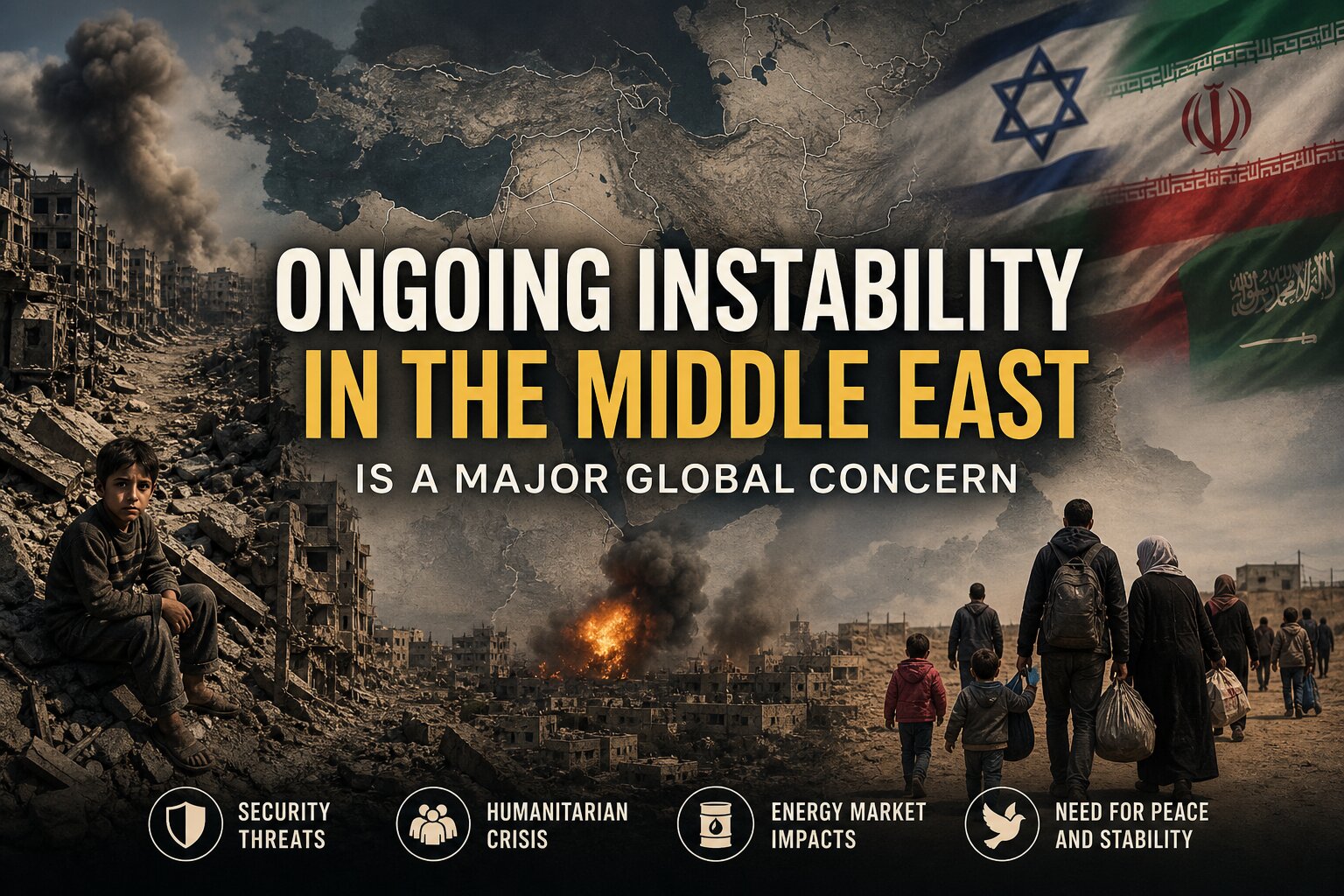
Ongoing instability in the Middle East is a major global concern, shaping international politics, economic trends, and humanitarian priorities in profound ways. The region, which includes countries such as Syria, Iraq, Israel, Palestine, Iran, and Yemen, has long been a focal point of geopolitical tensions. These tensions are driven by a complex mix of historical disputes, religious divisions, political rivalries, and external interventions. As conflicts persist and new crises emerge, the ripple effects extend far beyond regional borders, influencing global security, migration patterns, and energy markets. Understanding why ongoing instability in the Middle East is a major global concern requires a closer look at its root causes, current conflicts, and worldwide implications.
Historical Roots of Instability in the Middle East
Here’s what you need to know:
Colonial Legacies and Artificial Borders
The origins of ongoing instability in the Middle East can be traced back to the early 20th century, particularly following the collapse of the Ottoman Empire after World War I. European powers, notably United Kingdom and France, drew borders that often ignored ethnic, tribal, and religious divisions. Agreements such as the Sykes-Picot Agreement created artificial states that lacked cohesive national identities. This laid the foundation for internal tensions and conflicts that persist today.
Sectarian Divisions
Religious differences, especially between Sunni and Shia Muslims, have played a significant role in fueling instability. Countries like Saudi Arabia (predominantly Sunni) and Iran (predominantly Shia) have engaged in proxy conflicts across the region. These sectarian rivalries have intensified conflicts in places like Yemen and Syria, making resolution more difficult and prolonging violence.
Key Conflicts Driving Instability
The Israel-Palestine Conflict
One of the most enduring and visible examples of ongoing instability in the Middle East is the conflict between Israel and Palestine. Decades of territorial disputes, political disagreements, and cycles of violence have created a deeply entrenched conflict. Despite numerous peace efforts, tensions continue to escalate periodically, drawing international attention and concern.
The Syrian Civil War
The civil war in Syria, which began in 2011, has been one of the most devastating conflicts in recent history. It has involved multiple factions, including government forces, rebel groups, and extremist organizations. External powers such as Russia and the United States have also played significant roles, turning the conflict into a proxy war. Millions have been displaced, contributing to a global refugee crisis.
The Yemen Crisis
The conflict in Yemen is another critical factor contributing to ongoing instability in the Middle East. A civil war between government forces and Houthi rebels has led to one of the world’s worst humanitarian crises. The involvement of regional powers, including Saudi Arabia and Iran, has further complicated the situation.
The Role of Global Powers
Strategic Interests and Military Presence
Global powers have long been involved in the Middle East due to its strategic importance, particularly its vast oil reserves. The United States maintains military bases across the region, while Russia has strengthened its influence through involvement in Syria. These interventions often aim to protect national interests but can exacerbate local conflicts.
Energy Security and Economic Impact
The Middle East holds a significant portion of the world’s oil and gas reserves, making it crucial for global energy security. Instability in countries like Iraq and Iran can disrupt supply chains and lead to fluctuations in global oil prices. This has a direct impact on economies worldwide, highlighting why ongoing instability in the Middle East is a major global concern.
Humanitarian Consequences
Refugee Crisis
Ongoing conflicts have forced millions of people to flee their homes. Countries such as Turkey, Lebanon, and Jordan host large numbers of refugees, placing significant strain on their resources. Many refugees also attempt to reach Europe, leading to political and social challenges there.
Human Rights Violations
War and instability often lead to widespread human rights abuses, including civilian casualties, displacement, and lack of access to basic services. Organizations like United Nations have repeatedly raised concerns about violations in conflict zones across the Middle East.
The Rise of Extremism
Terrorist Organizations
Instability creates fertile ground for extremist groups to thrive. Organizations such as ISIS and Al-Qaeda have exploited weak governance and ongoing conflicts to expand their influence. Their activities pose significant security threats not only within the region but also globally.
Global Security Threats
The spread of extremism from the Middle East has led to terrorist attacks in various parts of the world. This underscores how ongoing instability in the Middle East is a major global concern, affecting international security and prompting coordinated counterterrorism efforts.
Diplomatic Efforts and Challenges
Peace Negotiations
Numerous diplomatic initiatives have been launched to address conflicts in the Middle East. However, achieving lasting peace has proven difficult due to deep-rooted mistrust, competing interests, and complex alliances. Efforts by organizations such as the United Nations often face significant obstacles.
Regional Cooperation
Some progress has been made through regional cooperation and normalization agreements. For example, certain Arab states have taken steps to improve relations with Israel. While these developments are promising, they do not fully resolve underlying conflicts.
Economic and Social Impacts
Infrastructure Destruction
Years of conflict have devastated infrastructure in countries like Syria and Iraq. Rebuilding efforts require substantial investment and long-term stability, which remain uncertain.
Youth Unemployment and Instability
High unemployment rates, particularly among young people, contribute to social unrest. Without economic opportunities, many individuals become vulnerable to recruitment by extremist groups, perpetuating cycles of instability.
Why the World Should Care
Global Interconnectedness
In today’s interconnected world, instability in one region can have far-reaching consequences. From rising oil prices to increased migration and security threats, the effects of Middle Eastern conflicts are felt globally.
The Need for Collective Action
Addressing ongoing instability in the Middle East requires coordinated international efforts. Governments, international organizations, and civil society must work together to promote peace, stability, and development.
Conclusion
Ongoing instability in the Middle East is a major global concern that cannot be ignored. Its roots lie in historical decisions, sectarian divisions, and geopolitical rivalries, while its consequences extend across borders, affecting economies, security, and human lives worldwide. Despite numerous challenges, there remains hope that through sustained diplomatic efforts, regional cooperation, and international support, a more stable and peaceful Middle East can emerge. Until then, the region will continue to play a critical role in shaping global affairs, reinforcing the urgency of addressing its ongoing instability.